
Table of Contents
Losing hair can be a source of lack of self-esteem, a negative impression given to others, and poor mental health.
Due to growing understanding and improved medical technology, hair transplant procedures have gained much popularity in India.
But, among patients, one question that still causes concern is whether a hair transplant is safe or not.
This article clarifies the safety of hair transplant, the risks and side effects, expert opinion, and the cost of hair transplant in India; also compares GFC hair treatment as a non-surgical option.
This guide will aid you in making a decision that is well-informed and self-assured if you are weighing the treatment option.
Understanding Hair Transplant: A Medical Overview
A hair transplant is a small surgery where hair roots are removed from the donor area (generally the back or side of the head) and placed into spots with less hair or no hair at all. The hair is from the donor area, which is a temptation for hair loss due to genetic properties.
The two most common methods are:
- FUE (Follicular Unit Extraction) – Single follicles are taken out and put back in
- FUT (Follicular Unit Transplantation) – A small piece of scalp is taken off and divided into grafts
Both processes are done with local anesthesia and do not require a stay in the hospital.
Hair Transplant Safe or Not? (Short Answer)
Sure, a hair transplant is safe under the following conditions:
- The operation is carried out by a well-trained and experienced dermatologist
- It is done in a sterile clinic with medical equipment
- The patient is undergoing a thorough evaluation before the surgery
Hair transplant has been regarded as a low-risk, high-satisfaction cosmetic procedure with a widespread, successful track record throughout the world.
How Safe Is Hair Transplant Medically?
From a medical standpoint, however, hair transplant surgery is an extremely risk-free cosmetic procedure if performed correctly in clinics.
The safety of the treatment is governed mainly by three factors that are pivotal in reducing medical risks and complications.
👉 1. Type of Procedure
Modern hair restoration techniques, especially the Follicular Unit Extraction (FUE) method, are referred to as minimally invasive.
For example, FUE does not necessitate the creation of big cuts and stitching in most of the cases, which is the opposite of the traditional strip-based methods.
This results in very little bleeding, a lower risk of infection, rapid healing of the wound, and less post-operative pain.
Besides, modern instruments not only give precision to the extraction of hair grafts but also the proper preservation of the surrounding scalp tissue, thus elevating the safety and predictability of the procedure.
👉 2. Anaesthesia Utilized
The hair transplantation operation employs local anaesthesia and not general anaesthesia.
This is a significant safety benefit since it eliminates the risk of suffering from breathing difficulties, heart strain, and taking a long time to recover.
The patients are awake throughout the operation, and, at the same time, the occurrence of complications related to anaesthesia is extremely low.
👉 3. Donor Hair
The hair follicle that is being transplanted comes from the patient’s own scalp, and hence there is no chance of immune rejection or an allergic reaction. Natural selection of biocompatibility can be seen here quite clearly.
In conclusion, if it is done properly by qualified professionals, hair transplant surgery will not have any effect on your brain, your nerves, your eyesight, or your overall health, thus it will be medically safe for the right patient.
👉 Common Myths About Hair Transplant Safety
Let us discuss some frequently asked questions and misconceptions about hair transplant safety:
Myth: Hair transplant procedure harms the brain.
Fact: The surgery takes place only at the top layers of the scalp and does not go near the skull or brain at all.
Myth: Hair transplant is very painful
Fact: The pain is localized, and discomfort that is experienced during or after the operation can be easily taken care of with medicine.
Myth: Hair transplant has long-lasting side effects
Fact: Redness and swelling are the main side effects, but they do not last long; usually, they disappear in a few days or weeks.
Myth: Hair that has been transplanted looks unnatural
Fact: If the hair transplant is done by an expert doctor with modern techniques, the transplanted hair will grow naturally and mix with the existing hair.
Myth: Hair transplant stays in the hospital for a long time
Fact: The whole procedure is done in a day-care setting, and usually, patients go home on the same day.
Possible Risks and Side Effects of Hair Transplant
Despite being a safe procedure, hair transplant is still a medical intervention, and it may cause some temporary side effects in the first few weeks, especially.
👉 Common and Temporary Side Effects
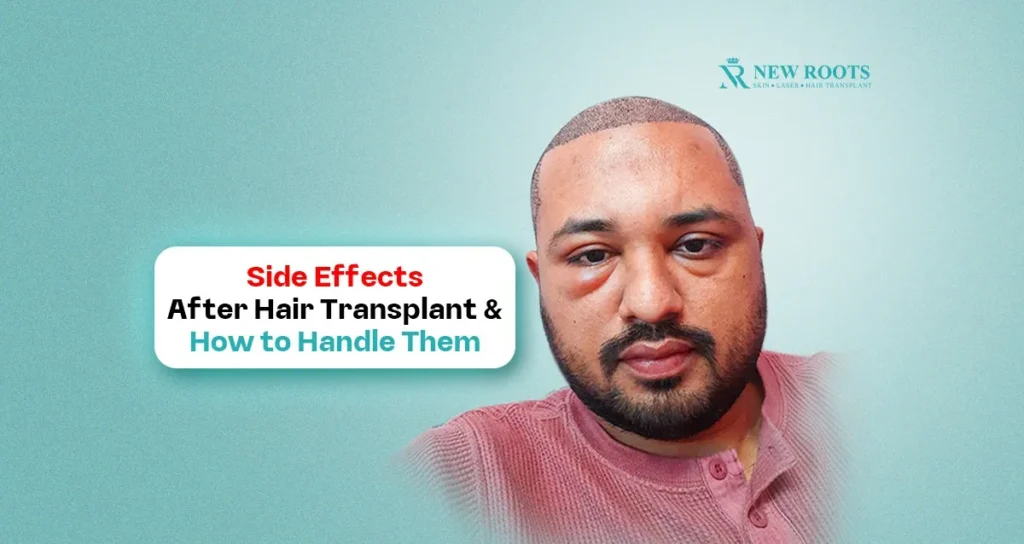
- A little bit of swelling on the forehead or around the eyes
- Redness or scabbing at the transplant site
- Itching during the healing process
- Temporary loss of sensation
- Shock loss (it is the temporary shedding of grapes)
Usually, all these effects get healed within 7–21 days.
👉 Rare but Possible Complications
These complications are not only rare but also mainly due to poor technique or lack of hygiene:
- Infection
- Bleeding that is more than normal
- Hair growth that is not evenly distributed
- Scarring, which is mainly visible with FUT
The experience of the doctor you choose plays a significant role in the reduction of these risks.
Who Is a Safe Candidate for Hair Transplant?
Hair transplant procedures are considered safe and effective therapy for patients who fulfill specific medical and clinical criteria. It is primarily suitable for both sexes with pattern baldness, where hair loss occurs predictably.
Patients with sufficient hair on the back or sides of their heads will derive the best outcomes, as such donor hair will give rise to the appearance of naturally-placed, long-lasting results.
Typically, the procedure is performed on people aged 25 and older since the hair loss patterns are going to be less variable then.
It will be those individuals with stable or very slowly progressing hair loss who are going to be the most favorable candidates, since their outcomes will be less variable.
Who Should Be Cautious or Avoid It?
Uncontrolled diabetes, bleeding disorders, active scalp infections, or alopecia areata are conditions that will require extreme caution before any medical procedures.
In these situations, the practitioners may not be able to predict the outcome, or the process could take longer than expected.
So it’s crucial to have a thorough medical consultation to check for the right conditions and to safeguard the patients.
Hair Transplant Cost in India: Safety vs Price
It is a frequent error that patients commit when they pick out clinics only depending on the prices. The low price should not put safety at risk.
👉 Average Hair Transplant Cost in India
- Cost per graft: ₹25 – ₹60
- Small session (1,500 grafts): ₹40,000 – ₹75,000
- Large session (3,000 grafts): ₹90,000 – ₹1,80,000
The price for a hair transplant in India is much lower than in a lot of other countries, but on the other hand, the quality and skill hugely differ.
👉 Why Very Cheap Hair Transplants Are Risky
- Unskilled technicians employed
- Inadequate sterilisation practices
- Excessive extraction from the donor site
- Scarring that could last a lifetime
It is always safety that comes first, and then cost.
Is GFC Hair Treatment a Safer Alternative?
GFC hair treatment has become a widely accepted non-surgical option for patients who are not ready for surgery yet.
What Is GFC Hair Treatment?
GFC therapy (Growth Factor Concentrate) is a process that involves the application of the growth factors that are generated from the patient’s own blood to the hair follicles and thus improves the thickness of the hair.
Safety of GFC Hair Treatment
One of the main reasons why GFC hair treatment is regarded as very safe is that it
- Is a non-invasive procedure
- Utilizes the patient’s own biological material
- There are no cuts, stitches, or scars
- Less recovery time
Who Should Choose GFC Instead of Hair Transplant?
- People with initial hair thinning
- Those with widespread hair loss
- Women with decreased hair density
- Patients who are afraid of the surgery
GFC isn’t a replacement for hair transplant in cases of severe baldness, but it’s a drug that can prevent and enhance the strengthening treatment.
Hair Transplant vs GFC: Safety Comparison
| Factor | Hair Transplant | GFC Hair Treatment |
| Invasiveness | Minor surgery | Non-surgical |
| Downtime | 5–7 days | 0–1 day |
| Permanence | Permanent | Maintenance needed |
| Risk level | Low | Very low |
| Best for | Bald areas | Thinning hair |
Expert Advice to Ensure Hair Transplant Safety
Before hair transplantation, available expert advice is to:
Choose the Right Doctor
- Seek experience rather than promotions
- Inquire about who does the operation (doctor or technician)
Pre-Procedure Evaluation
- Scalp examination
- Medical history check
- Realistic expectations
Follow Post-Procedure Care
- Smoking and drinking are prohibited
- The scalp should not be scratched or rubbed
- Washing instructions should be followed to the letter
- Medications prescribed should be taken
Proper aftercare is a significant factor in both safety and outcome.
Long-Term Safety: Are Transplanted Hairs Permanent?
Yes, hair follicles in transplant surgery are regarded as permanent and long-term. The follicles are extracted from areas that are not prone to hair loss, usually the back or sides of the scalp, in individuals who have the genetics that are resistant to hair loss.
After being grafted, they keep this resistance and obtain a life cycle of human hair growth. After the initial shedding stage, permanent growth is then attained and takes place in a few months.
On the other hand, it is a must that the thinning of available non-transplanted hair may be a slow process. Doctors usually recommend supportive procedures like GFC hair treatment or prescribed medications to maintain the overall density and to slow down future hair loss.
Psychological Safety and Expectations
Hair transplant is not merely a technical method but a profound change of attitude and feeling through which the whole human being benefits.
The psychologists working with dermatologists have marked the preparation of patients coming for hair transplant surgery as a very important aspect in relation to the patients’ mental and emotional condition and, thus, the patients’ overall satisfaction with the result.
Realistic expectations play a significant role:
- It takes 6-12 months for the eventual outcome to be seen clearly, since the hair grows in natural cycles
- The improvement in density takes place gradually, during the different growth phases, and not all at once
- No one can have a perfect head of hair, but a very noticeable and confidence-boosting improvement is, in fact, the goal
Getting the timeline of recovery right will go a long way in not exacerbating the patient’s stress or disappointment. Proper counseling and the patient being in the right frame of mind lead to the patient being very satisfied, and the whole hair transplant process being seen as positive and worthwhile.
Final Verdict: Is Hair Transplant Safe or Not?
A hair transplant is a safe, effective, and medically endorsed procedure so long as it is carried out by experienced hands and according to the medical standards.
The risks are very low, the side effects are short-lived, and the outcomes can be life-altering.
GFC hair treatment is a non-invasive and safe way to address early hair loss. In case of extensive baldness, the only choice left is a hair transplant, which is the most trustworthy one.
The main factor for safety is choosing wisely, consulting professionals, and practicing treatment ethically.
Frequently Asked Questions (FAQs)
Indeed, a hair transplant is safe from the medical standpoint if the procedure is handled by a skilled and experienced physician in a clean and safe clinical setting. Modern methods like FUE (Follicular Unit Extraction) are very minimally invasive, administered with local anaesthetic, and have a very low possibility of complications.
Surgery of hair transplantation is termed safe in the long run as well. The grafts are taken from the parts of the scalp that are genetically resistant to falling, so such grafts ultimately live a lifetime. The surgery does not in any way affect the brain, the nerves, or overall health. The longevity of the graft depends on the right technique, the quality of the donor hair, and the post-operative care.
Swelling, redness, formation of scabs, itching, and the loss of hair, which is known as shock loss, are all common side effects of the procedure. The side effects are transient and generally clear up within a period of 1-3 weeks. When the operation is carried out the right way, the occurrence of severe complications like infections or scarring is very rare.
Usually, the cost of a hair transplant in India per graft is about ₹25 to ₹60. The final cost is determined by the number of grafts, the method applied, and the skill of the clinic. It is a must to prioritize safety and quality in any case over lower prices.
GFC hair treatment is a non-surgical procedure, and it is very safe; it requires a very short recovery time. It works best for the early stages of hair thinning, but cannot substitute a transplant in the case of advanced baldness.


