
Table of Contents
A receding hairline is one of the earliest and most conspicuous symptoms of hair loss for both genders. Oftentimes, it starts very subtly, but neglecting it can cause a gradual thinning of hair and eventually, a permanent hair loss.
For the right decision to be made at the right time, it is crucial to know the reasons for a hairline to recede, to recognize it early, and to be aware of the effective treatment options.
This comprehensive guide provides all the necessary information about receding hairlines—discussing the causes, the early signs, how to differentiate between a mature hairline and a receding hairline, the hairstyles suited for a receding hairline, the treatment options available (both medical and natural), GFC hair treatment, the safety of hair transplant, and the cost of hair transplant in India.
What Is a Receding Hairline?
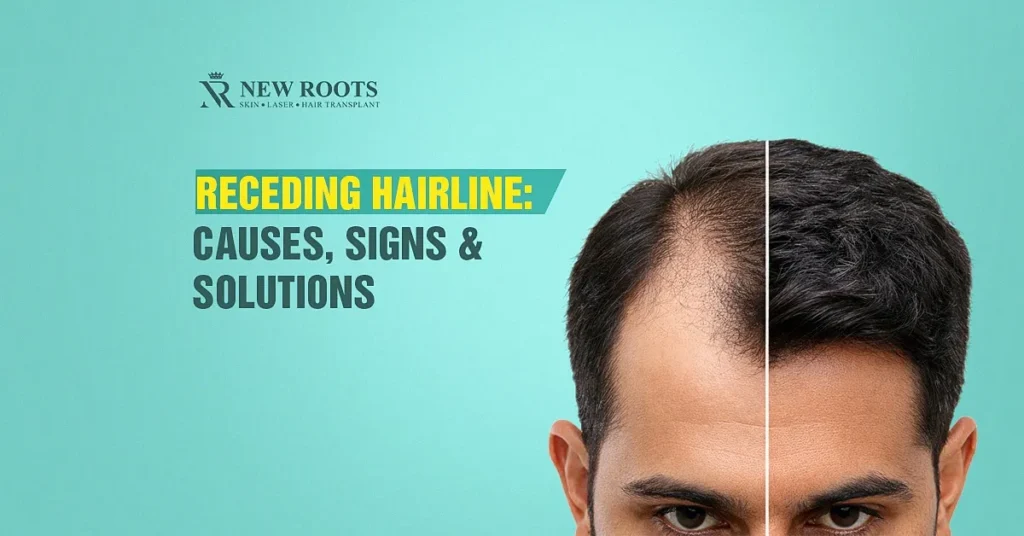
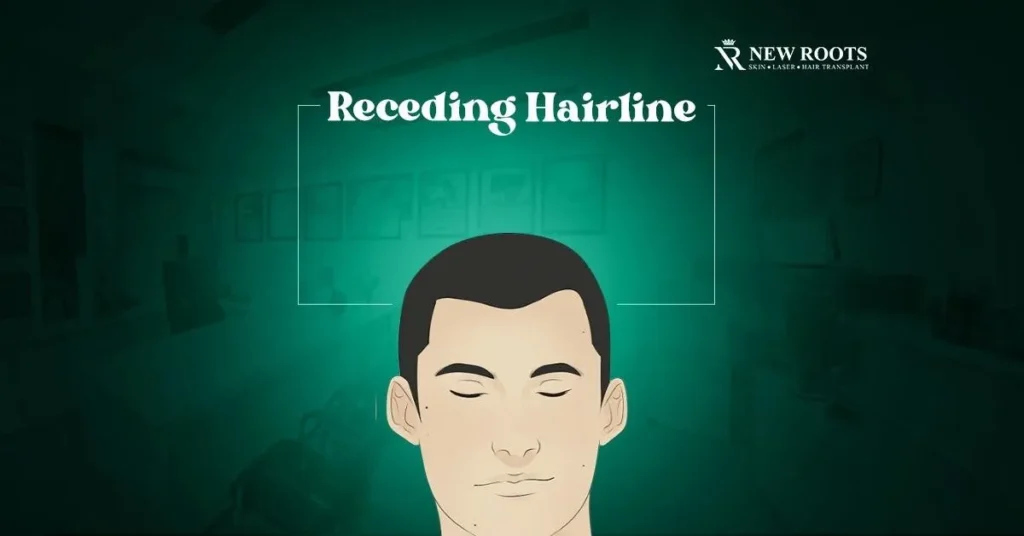
A receding hairline is defined as the gradual thinning of hair that starts retreating from the forehead, most typically starting at the temples.
After some time, this retreating creates a clearly defined “M” or “U” shape in men. In ladies, the hairline is usually receding less noticeably, showing up as the front hairline or sides being wider or thinner instead of forming a more defined pattern, as in the case of men.
The most prevalent reason for hairline recession is the genetic condition androgenetic alopecia, which is affected by hormones and causes the follicles to shrink progressively.
Nevertheless, genetics is not the only reason. Unhealthy lifestyles, constant stress, poor diets, hormonal fluctuations, and some medical conditions might also weaken the hair follicles at the hairline gradually and make them lose visibility if not treated accordingly.
Mature Hairline vs Receding Hairline
The difference between a mature hairline and a receding one is often confused, which leads to unnecessary panic among people who are not familiar with the distinction.
👉 Mature Hairline
- A naturally occurring phenomenon in late teens/early 20s
- Slight backward movement of the hairline and then stabilization
- No rapid loss of hair or patchiness
- Strong hair density behind the hairline

👉 Receding Hairline
- Gradual backward movement over a period of time
- Thinning at the temples becomes noticeable
- More hair fall
- Often family history of baldness is a factor
One major difference is that a mature hairline doesn’t continue to recede, while a receding hairline will eventually worsen if left untreated.
Common Causes of a Receding Hairline
1. Genetics (Primary Cause)
Genetics is the leading cause of a receding hairline. The inherited vulnerability to DHT (dihydrotestosterone) gradually causes the hair follicles to shrink and the hair growth cycle to be shorter. Eventually, hairs become thinner, weaker, and stops growing, resulting in the recession of the hairline that is noticeable.
2. Hormonal Imbalance
Hormonal changes can have a huge impact on the patterns of hair growth. Alterations related to testosterone and its conversion to DHT can lead to premature hairline recession, especially in men. Women’s hairline recession can also be caused by hormonal changes during pregnancy, postpartum periods, and thyroid issues.
3. Stress & Lifestyle
Chronic stress, whether it is emotional or physical, causes an increase in cortisol levels in the body. One of the results of high cortisol levels is the alteration of the hair growth cycle, and more follicles are pushed into the shedding phase.
Not having a good sleep, smoking, not being involved in an exercise routine, and having irregular life routines all contribute to the worsening of the hairline thinning problem even more.
4. Poor Nutrition
The normal functioning of the hair follicles is dependent on the proper supply of nutrients. Hair roots are weakened, their growth is slow, and breakage of hair along the hairline, which is the most vulnerable area, is increased, all due to insufficient amounts of protein, iron, zinc, biotin, and vitamins.
5. Aggressive Hairstyling
The three main reasons that continuously create tension and damage to the hair follicles in the hairline area, thus leading to hair loss by traction, are frequent tight hairstyles, prolonged heated styling tools, and the application of chemical products.
6. Medical Conditions
Thyroid diseases, autoimmune conditions, and chronic scalp infections are a few of the health concerns that can interrupt the typical hair growth cycle and give rise to slow and, in particular, frontal area hair loss.
Early Signs of a Receding Hairline
Identifying early signs of a receding hairline is crucial, as timely treatment greatly improves success and helps preserve existing hair. In the initial stages, changes are often subtle and easy to overlook, but they gradually become more noticeable if ignored.
Common early signs include:
- Thinning at the temples, especially when compared to previous years
- Increased hair fall during washing, combing, or styling
- The forehead appears larger or more prominent than before
- An uneven or asymmetrical hairline develops over time
- Reduced hair density at the front when compared to the crown area
These changes indicate that hair follicles near the hairline are weakening and entering shorter growth cycles. Early intervention through medical treatment, lifestyle changes, or regenerative therapies can significantly slow progression, help stabilise hair loss, and in some cases partially reverse hairline recession before permanent follicle damage occurs.
Hairstyles for Receding Hairline
A right haircut can change a person’s looks and also boost his/her self-esteem immediately.
Best Hairstyles for Receding Hairline
Buzz Cut: Reduces the difference between thin and thick spots
Crew Cut: Directs attention away from temples
Textured Crop: Front gets volumized
Side Part (Soft): Hides temple recession
Short Pompadour: Gives the perception of density
Hairstyles to Avoid
Slicked-back hairstyles
Middle parting
Long hair tightly drawn back
A good receding hairline haircut can certainly make thinning less visible
How to Stop a Receding Hairline
To prevent a receding hairline, it is essential to take early action, be consistent, and choose the appropriate treatments.
The aim is to stop the follicle miniaturization process, lessen the hair fall, and keep the hair that is still there, all this before permanent damage sets in.
Medical Approaches
- DHT blockers are the first step in the process of slowing down the follicles by preventing the entire hairline from receding
- Topical growth stimulants are the second step, as they prolong the active growing phase of hair follicles.
- Oral supplements are the third step, which gives the necessary nutrition to the hair roots to be stronger.
Lifestyle Changes
- Stress management is done through proper sleep, regular exercise, and meditation.
- A proper diet that includes protein, iron, zinc, biotin, and essential micronutrients should be followed.
- Care for the scalp should be gentle, and one should avoid harsh chemicals, excessive heat, and tight hairstyles.
The combination of medical treatment and healthy lifestyle habits brings about the best results. Controlling hair loss works best as a preventive measure first, while restorative options are considered later if the progression continues.
Receding Hairline Treatment Options
1. Topical & Oral Treatments
Topical solutions and oral medications are the most common treatments used at the onset of a receding hairline. These methods act by hair fall prevention, follicle miniaturization slowing down, and maintaining hair density.
The presence of these treatments is efficient in controlling the disease process, but usually does not cause hair regrowth in the already advanced recession areas. A continuous and long-term application is required to keep up the results.
2. GFC Hair Treatment
GFC (Growth Factor Concentrate) hair treatment is a very new regenerative therapy that utilizes concentrated growth factors extracted from your body.
These growth factors are injected into the scalp area and are said to bring back weak follicles and the overall hair quality through various reactions.
Some of the GFC Hair Treatment benefits are:
- Non-surgical and minimally invasive
- Minimal downtime with quick recovery
- Improves hair thickness and texture
- Strengthens weak and thinning follicles
- Suitable for early to moderate hairline recession
GFC treatment works effectively when hair follicles are still alive and responsive.
3. Microneedling-Based Therapies
The microneedling technique causes controlled micro-injuries on the scalp, which in turn induces blood flow and collagen production. Besides, this particular process also facilitates the absorption of topical growth factors as well as their effectiveness.
4. Hair Transplant (Permanent Solution)
If the follicles are completely and irreversibly damaged, a hair transplant is the only option left for you to regain a natural-looking hairline permanently.
How to Regrow a Receding Hairline Naturally
Only in the early stages can natural regrowth take place.
Natural Methods That Help
Scalp massage to increase blood circulation
A diet high in protein
intake of iron and zinc
lessening of stress
no harsh styling practices
What to Expect
Natural methods can:
Hair fall can be reduced
The thickness can be improved
The recession can be slowed
Is Hair Transplant Safe?
Hair transplantation treatments are considered safe if performed by qualified experts using the latest techniques.
Safety Factors
Less Invasive
Conducted with a local anesthetic
Minimal complications
Looks like your own hair
Possible Temporary Side Effects
Slight swelling
Skin discoloration
Loss of hair for a short time (shock loss)
Very serious risks are unlikely to occur if the procedure takes place in a recognized clinic.
Hair Transplant Cost in India
The number of hair transplants in India depends on the method used, the number of grafts, and the skill of the clinic.
Average Hair Transplant Cost in India
Cost of one graft: ₹25 – ₹60
Minor hairline correction: ₹40,000 – ₹80,000
Medium recession: ₹80,000 – ₹1,50,000
Advanced hairline restoration: ₹1,50,000 – ₹2,50,000+
Factors Affecting Cost
Grafts needed
Method (FUE, SLIT)
The infrastructure and city where the clinic is located
In India, one can find first-rate hair restoration procedures available at prices that are competitive with the global market.
Choosing the Right Treatment for Your Receding Hairline
| Stage of Hairline | Recommended Approach |
| Early thinning | Lifestyle + medical treatment |
| Mild recession | GFC hair treatment |
| Moderate recession | Combination therapy |
| Advanced recession | Hair transplant |
Final Thoughts
A receding hairline is a usual thing—but it should not be the thing that determines your looks or your self-esteem.
Early detection, accurate diagnosis, and prompt treatment can effectively halt hair loss and even make the hair thicker again.
From clever haircuts for receding hairlines to progressive methods such as GFC hair treatment and hair transplantation, there are techniques for every level of baldness.
The main point is not to wait. The sooner you do something about it, the more choices you get—and the more successful your treatment will be.
Frequently Asked Questions (FAQs)
A mature hairline typically retreats a little bit backward in late adolescence or early adulthood and then becomes stable without further loss of hair. Whereas a receding hairline keeps on going back slowly, and at the same time, thinning occurs at the temples, and hair loss increases. A change in the shape of the hairline or a very noticeable reduction in density will signal its being receding.
Styles that are short and structured are the most suitable ones. A buzz cut, a crew cut, a textured crop, and a soft side part are good options as they minimize the contrast between the areas of thin and of dense hair. Slicked-back or tightly pulled styles should be avoided since they make the recession more visible.
The focus of early treatment is on slowing down the shedding of hair and making the roots stronger. A combination of medical treatments, proper diet, stress management, and mild hair care can give one time or even bring back the hairline to where it was before the recession started.
Natural methods can make the hair thicker and reduce hair fall in the early stage of hair loss, but they cannot restore hair in case the hair follicles are permanently damaged.
Indeed, in the hands of a skilled surgeon, a hair transplant is a safe and effective solution for long-term hairline recession.


