
Table of Contents
In most cases, hair transplantation is a safe and effective solution to baldness when it is done by highly skilled doctors. But on the downside, infections are one of the main risks and are also the most concerning but preventable.
Generally, the occurrence of infections is not so frequent, but they can become a problem if not treated on time, affecting the healing process, graft survival, and final results.
This comprehensive manual informs about the causes of hair transplant infections, early symptom recognition, preventive measures, and the most efficient treatment options that allow patients to make a well-informed and safe choice.
What Is Infection After Hair Transplant?
Infection after hair transplant occurs when the scalp is infected with bacteria, fungi, or other microorganisms during or after the procedure. Hair transplant surgery involves making thousands of tiny cuts to take and place the grafts.
If these tiny wounds are exposed to dirt, bad hygiene, or improper aftercare, then the infection will surely happen at the graft sites.
Due to the modern techniques used, sterile operating rooms, and preventive antibiotics, the occurrence of hair transplant infection is very rare.
However, the chance of getting an infection is higher when the post-op instructions are not adhered to, there is excessive sweating, or the patient has any disorder that slows down recovery.
Early diagnosis and timely treatment play a significant role in averting complications and preserving the transplanted hair follicles.
Common Causes of Infection After Hair Transplant
He who comprehends the reasons makes it easier to avoid the complications that might arise.
1. Neglecting Hygiene after Surgery
Contaminated hands, dirty towels, and unwashed pillowcases are all ways of transferring bacteria to the scalp, where the grafts are healing.
2. Inadequate Sterilization of Clinic
The occurrence of hair transplant complications is common when the clinics are unable to adhere to the sterilization standards for instruments, the operating room, or staff hygiene.
3. Much Sweating
Sweat is moisture, and bacteria thrive in such an environment. Mixing heavy workouts, hot weather, or sauna use right after surgery can lead to scalp infection post-hair transplant.
4. Non-compliance with Post-Operative Instructions
Failure to take the prescribed antibiotics, premature washing of hair, or scab scratching raises the chances of infection.
5. Compromised Immune System
Diabetic patients and those with autoimmune disorders, smoking habits, or poor nutrition may take longer to heal and are liable to infection.
6. Hair Product Overuse
The application of oils, gels, herbal remedies, or unapproved products on the scalp before complete healing may clog the hair follicles and characteristically introduce pathogenic bacteria.
Hair Transplant Infection Symptoms
Early detection is of utmost importance. In most cases, the infections have mild beginnings and become worse if not treated.
Early Symptoms
Redness that is persistent beyond 3-4 days
Slight swelling that has not gone down
Pain or sensitivity in a specific area
Graft sites are feeling warm
Moderate Symptoms
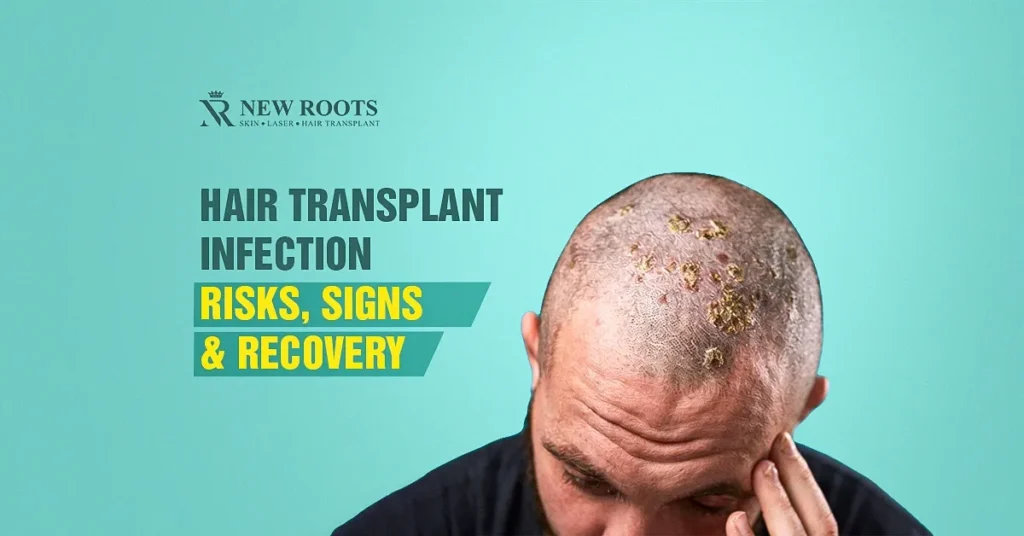
Discharge of yellow or white pus
Bad smell coming from the scalp
More itching or burning sensation
Development of painful blisters
Severe Symptoms
Having a fever or chills
Redness spreading
Very painful scalp
Tissue necrosis or blackened scabs
Heavy graft loss
It is advisable to consult a doctor instantly if symptoms of hair transplant infection occur.
Types of Scalp Infection After Hair Transplant
The scalp infection of different types can vary after a hair transplant, depending on the hygiene, the patient’s immune system, and the post-procedure care. The early detection of infections is essential for preventing serious complications after a hair transplant.

1. Bacterial Infection
This is the most frequent type of infection seen after a hair transplant. Usually, the problem arises when the skin bacteria invade the open graft sites due to the healing process.
The area surrounding the infection shows signs of redness, pain, swelling, pus production, and increased temperature. Quick antibiotic therapy can knock out the infection.

2. Folliculitis
Folliculitis is a condition where the hair follicles are inflamed, and it always comes in the form of small red or white pus-filled bumps.
It can develop a few days or even weeks after surgery because of clogged follicles, sweating, or bacterial proliferation. Mild cases get resolved even faster with minimal medical intervention.

3. Fungal Infection
Fungal scalp infections can be caused by exposure to very humid environments or the overuse of immunosuppressant drugs.
The symptoms of such infections can be rather uncomfortable, ranging from itching and scaling to redness and even patchy irritation. The patient may need to undergo antifungal treatment for full recovery.

4. Necrotic Infection (Rare)
This is a rare but very serious condition that is caused by a combination of factors, such as ineffective blood supply, smoking, over-contact with the grafts, and unchecked infections. If not treated immediately, it may result in the death of tissues, scarring, and even permanent loss of the graft.
Hair Transplant Complications Related to Infection
To sum up, failure to treat infection post-hair transplant can result in very serious short-term and long-term complications affecting not only the healing process but also the final results:
- Permanent graft failure, whereby the infected hair roots are turned into non-living matter, and thus the area will suffer from a lack of hair or poor quality of hair, if at all.
- Scarring or uneven scalp texture, which is the result of prolonged inflammation or tissue destruction at the graft.
- Delayed healing leads to more discomfort and a longer recovery period.
- Chronic folliculitis is the same as getting recurrent painful bumps on the head and persistent irritation on the scalp.
- Poor cosmetic results, which are such as irregular hair density and areas of the scalp being visible.
- Increased requirement for corrective surgery, which might mean performing more procedures just to restore the appearance.
Hair Transplant Infection Treatment
The treatment for hair transplant infection will depend on the type, severity, and progression. Usually, infections that are at an early stage can be managed easily, but in the case of advanced ones, medical supervision is needed closely.
1. Oral Antibiotics
Oral antibiotics are the drugs commonly used for controlling bacterial infections and also for preventing further spread. The doctor prescribes the full course, and a patient is supposed to complete it even when the patient feels better, since stopping the medication early can lead to recurrence or resistance.
2. Topical Antibiotic Ointments
These ointments are directly applied to the infected graft sites, which reduces the localized bacterial count, provides relief from the irritation, and also facilitates the scalp’s quicker healing.
3. Antifungal Medications
In the case of a diagnosis of a fungal infection on the scalp after a hair transplant, antifungal creams or oral preparations will be prescribed according to the severity and medical assessment.
4. Anti-Inflammatory Medication
Such medications help minimize pain, swelling, and redness as well as discomfort, which in turn will enhance the patient’s recovery and comfort in general.
5. Drainage of Abscess
If pus-filled lesions or abscesses form in very severe cases, then sterile medical drainage might be done in order to prevent tissue damage and the loss of the graft.
6. Temporary Suspension of Hair Products
All cosmetic, chemical, or styling products are suspended until the complete healing process occurs in order to avoid further irritation or contamination.
Prevention of Infection After Hair Transplant
It is always better to prevent than to treat. Most infections can be avoided with proper prevention measures.
👉 Before Surgery
- Select an authorized and well-trained clinic
- Reveal your medical history and current medications
- Give up smoking and drinking according to the doctor’s recommendations
- Do not take blood-thinning medications unless permitted by the doctor
👉 Immediately After Surgery
- Avoid touching the grafts unnecessarily
- Follow the antibiotic schedule strictly
- Do not expose yourself to sweating, the gym, or the sun
- Keep your head elevated while sleeping
👉 During the Healing Phase
- Wash your scalp only according to the instructions given
- Do not touch or peel off scabs
- Use fresh pillows and towels
- Do not wear caps or helmets at the beginning
👉 Long-Term Care
- Follow regular scalp hygiene
- Have a diet rich in nutrients
- Drink water throughout the day
- Stay away from severe hair treatments
By carrying out these precautions, the chances of acquiring scalp infection following a hair transplant are considerably lessened.
When to See a Doctor Immediately
If any of the following symptoms occur after a hair transplant, do not hesitate to contact medical professionals right away:
- Pain or redness doesn’t get better by the end of the third day but instead gets worse; that’s when infection or inflammation can occur.
- Graft sites start to ooze or give off a discharge; this is a sign of infection that needs to be treated quickly.
- There is a development of a high temperature, which could be an indication that the infection has moved to other parts apart from the scalp.
- Scabs together with grafts fall off; this could mean infection or inflammation so severe that the follicles are damaged.
- The scalp has an unpleasant smell; this is usually due to bacteria or dead tissue.
Myths About Hair Transplant Infections
Myth 1: Infection Means Surgery Failed
Not true. Infection is an unfortunate incident after surgery, but not a reason to conclude the operation was unsuccessful. If it is early enough, it is, by and large, treatable with no impact on the final hair growth results.
Myth 2: Itching Always Means Infection
Itching is a normal and mild sign of scalp healing. The itching caused by infection is usually persistent, painful, and accompanied by all the signs such as redness, swelling, and discharge.
Myth 3: Natural Remedies Are Safer
This is wrong. Oils, herbal pastes, or home remedies may block the follicles, make the infection worse, and delay the healing process.
Myth 4: Infection Happens Only in Unhygienic Clinics
This is not the case. Infections can occur even under excellent clinical conditions because of poor post-operative care, excessive sweating, smoking, or lowered immunity during recovery.
Myth 5: Antibiotics Will Stop Hair Growth
This is not true. Antibiotics prescribed do not interfere with hair growth. Rather, they keep the grafts safe by controlling infection and promoting healthy healing.
Final Thoughts
Although an infection after a hair transplant is rare, it is still possible. Being informed, keeping things clean, and following the doctor’s advice are the main protective measures.
Early detection of hair transplant infection symptoms and quickly getting hair transplant infection treatment will ensure healing that is safe and gives the best results.
Picking the proper clinic, obeying aftercare directions, and keeping the scalp clean are ways to avoid almost all hair transplant complications and also to secure the success of the treatment in the long run.
FAQs
Hair transplant infection, if treated promptly and appropriately, is usually not dangerous. In the majority of cases, infections are mild and limited to the scalp area. However, untreated infection can result in death of transplanted grafts, a slow healing process, and, in rare cases, cause scarring or even hair loss. Severe infections can even go deeper into the skin, thereby making it essential to seek medical help immediately. Quick treatment is very important to address lingering problems.
Infection after hair transplant is infrequent, occurring in a few cases when the surgical procedure is done in sterile conditions. The latest methods, along with the use of antibiotics and the strict hygiene routines in place, have significantly reduced the risk. Poor post-operative care, heavy sweating, smoking, or touching the area with unclean hands are the most frequent reasons for getting the infection.
Oral antibiotics that are used for treating bacterial infections are normally prescribed by doctors, while local antibiotic ointments are given for treating localized symptoms. Depending on the infection’s severity and type, the specific drug will differ. It is very important to take the whole course of antibiotics even if the symptoms improve soon, in order to prevent the recurrence of the infection.
The recovery period is usually from 7 to 14 days once suitable treatment has started. These infections can be divided into three categories: mild, moderate, and severe; that is, the mild infections will resolve very fast, while the case of severe infections might take longer to monitor. In case the hair follicles are not destroyed, the new growth of hair will continue as before.
Certainly. In most cases, when the treatment is initiated early, the patients are able to have normal hair growth with no lasting impacts.


