
Remedies for Receding Hairline: Solutions & Treatments
Multiple Remedies for Receding Hairline, combined with various treatments, have been developed to both stop and reverse signs of hair loss in localized areas of the scalp.
The combination of minoxidil topical solutions along with finasteride oral drugs offers help for stimulating hair regrowth while blocking the hormones causing hair deterioration. Rosemary oil and saw palmetto, along with other natural remedies, present possible minimal advantages.
The health of hair benefits when people make dietary adjustments toward balance alongside strategies to handle stress and abstain from close hair styling.
Advanced hair loss cases can be remedied with hair transplant surgery, which moves healthy hair follicles from one part of the body to treat balding regions.
The most appropriate treatment requires an evaluation by dermatologists so people can receive effective options for their condition.
Introduction: Understanding remedies for receding hairline
Numerous individuals consider a receding hairline to be a substantial issue that leads to diminished self-esteem and diminished confidence levels. Medical research in dermatology, combined with increasing public knowledge of hair wellness, has produced multiple treatment solutions for receding hairlines by 2026.
The following paper presents nine proven solutions for remedies for receding hairlines and provides information about clinical and natural methods that fight against this common hair problem.
Knowledge about hair restoration therapies and their causes, as well as treatments, is essential because individuals who want control of their hairline need this information.
Table of Contents
Detecting a receding hairline requires prompt identification
Proactive recognition of a receding hairline ensures better results when treating this condition. Timely intervention becomes possible when people recognize their initial hair loss symptoms, which helps different treatments for receding hairline become more effective.
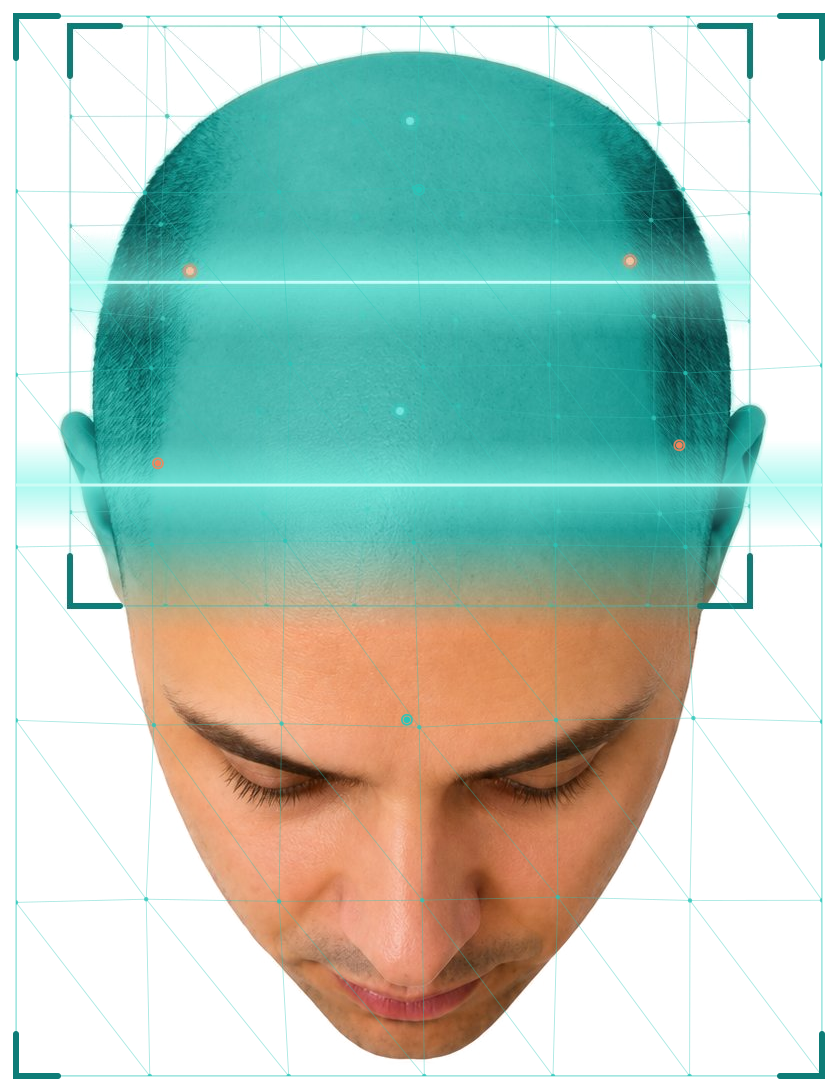
A receding hairline is indicated by gradual hair thinning around the forehead and temples, combined with an altered hairline shape into an “M” design and elevated hair loss.
Looking at recent pictures next to older images allows people to detect changes in their hairline position.
People who seek consultation with dermatologists and hair restoration specialists when their hairline starts to recede will obtain both precise diagnoses and personalized treatment plans.
The Discovery Process of Identifying the Recession of the Hairline
To pick suitable and effective remedies for a receding hairline, one must first understand the reasons behind this hair loss pattern. The development of this condition results from genetic causes, hormonal disorders, and unsustainable living patterns.
Genetic Predisposition:
Family inheritance serves as the main reason behind hair follicle sensitivity to hormones, which leads to hair recession. Over time, the condition causes hair to become thinner until it recedes from the head in a case of androgenetic alopecia.
Hormonal Imbalances:
The hormone dihydrotestosterone creates damage to follicles that results in faster hair loss, along with shortening of the natural growth cycle. Several groups tend toward this condition, including men, but it happens to some women, too.
Aging:
Older individuals experience naturally transforming hair follicles, which generate reduced and shortened hair strands. The natural density of hair decreases at the same time the hairline pulls back because hair cells have a lower ability to regenerate.
Lifestyle Factors:
Stress, together with poor eating habits and some hair styling techniques that tug the scalp, contributes to hair reduction at the front of the scalp. Time will accelerate hair loss due to the weakening effect that lifestyle factors have on hair follicles.
9 Effective Remedies for Receding Hairline in 2026
A range of efficient treatments exists for people who experience a hairline recession in the predicted year 2026—these range from medical treatments to natural approaches, each with its benefits and considerations.
Medical Treatments: Clinical medical treatments prove more effective than home remedies at treating and managing a receding hairline while giving substantial results.
Finasteride and Minoxidil: Medical authorities have licensed both medications as FDA-approved solutions for fighting hair loss. The prescription drug Finasteride obstructs DHT production in the body, allowing both drugs, Finasteride and topical minoxidil, to stimulate hair growth.
Dutasteride: Dutasteride functions similarly to finasteride by reducing DHT levels, making it a possible off-label prescription for hair loss. The drug is thought to be more powerful than finasteride; however, it presents the same range of side effects.
PRP Therapy: Medical personnel use concentrated platelets derived from the patient’s circulating blood during PRP therapy to inject them into the scalp area to promote localized hair regrowth. Medical practitioners use this procedure to help patients heal their tissues while stimulating hair follicle regeneration with increased blood delivery.
LLLT: The use of low-dose red and near-infrared light in LLLT stimulates hair cells by improving blood flow, which benefits hair growth. Patients receive positive results from this painless procedure since it enhances their hair density and thickness.
Natural Remedies
Natural treatments for hair retreatment help medical procedures or serve as complete substitutes for people focused on healing through natural methods.
Several herbal treatments for hair growth development.
Three popular herbs used for hair regrowth treatment besides saw palmetto are ginseng, aloe vera, and Indian gooseberry (amla).
- The combination of specific crucial oils containing rosemary, combined with cedarwood, peppermint, and lavender, enables promoting hair improvement.
- The usage of these oils facilitates better blood flow to the scalp region, even lowering inflammation. Before making use of these natural substances, they need to be mixed with a carrier oil.
- Regular massages implemented on the scalp will enhance blood circulation to hair follicles, hence boosting their growth whilst making hair extra strong.
- Individuals can use their hands to deliver scalp massages either by themselves or combined with massage tools and electronic massaging instruments.
- The pressure of managing stress presents a direct link to hair loss processes.
- By practicing yoga meditation together with exercise, individuals might develop new hair growth through stress-reduction techniques.
- A proper diet that contains nutritious elements enables the body to obtain vital components needed for healthy hair growth.
Spotlight on New Roots Clinic: A Leader in Hair Restoration Therapies
New Roots Clinic is a leading provider of hair restoration treatments that deliver innovative solutions for patients with diminishing hairlines.
Three customized treatment options exist at the clinic, which include Follicular Unit Extraction and Direct Hair Implantation, along with Platelet-Rich Plasma therapy.
Dr. Nilesh operates as a lead hair transplant surgeon at New Roots Clinic, where he delivers superior treatment standards and natural appearance outcomes.
The clinic places significant value on early intervention and delivers several hair loss prevention programs that aid patients in keeping their hairline healthy.
Spotlight on New Roots Clinic
New Roots Clinic maintains its status as one of India’s top hair transplant facilities, which delivers 100% natural outcomes through its advanced FUE techniques.
The clinic employs skilled doctor specialists for hair and skin who want to completely improve your appearance.
New Roots – Skin, Laser & Hair Transplant Clinic, under the management of Dr. Nilesh Pund, operates as a center that provides permanent solutions for skin and hair transplant treatments while maintaining a peaceful atmosphere.
The clinic has cutting-edge technologies combined with operating rooms and laser equipment that hold USA FDA approval.
Hairline Improvement Tips: Styling and Camouflage
The process of treating a receding hairline benefits from specific hairstyle techniques that both conceal hair loss and improve appearance. These hairline improvement tips include:
Strategic Hairstyles: A shaved haircut with layered hair texture and parting the hair on one side helps make a thinning hairline less detectable.
Root Touch-Up Products: Two useful solutions to hide hair loss near the hairline are spray-on root touch-up products alongside eyeshadows for coloring the affected areas.
Hair Accessories: Using headbands, scarves, or putting on hats enables the use of hair concealment while shielding your scalp from sun exposure.
The Role of Genetics in Receding Hairlines
People inherit from their genes their natural predisposition towards experiencing a receding hairline.
Androgenetic alopecia serves as the major cause of hair loss, yet it exists as an inherited condition that can stem from either side of the family.
The genes that control how sensitive hair follicles are to DHT determine both how quickly hair loss occurs and its distribution pattern.
Knowledge about genetic susceptibility guides personal decisions for early prevention and suitable treatment of hair thinning.
Hair Thickening Treatments: Enhancing Volume and Density
Multiple hair treatments exist to add volume and thickness to the hair. People can opt for volumizing shampoos together with conditioners that provide short-term volume enhancement, while minoxidil-based topical products stimulate hair development naturally.
The most long-lasting solutions for hair loss treatment consist of expert processes, which include hair transplant surgical procedures alongside laser remedies. Similar to healthy lifestyle modifications that reduce strain and increase nutrient density for hair growth to end up thicker.
Conclusion:
A mature appearance because of receding hair will stop being a major concern for people in 2026. By understanding why hairlines recede, along with learning to detect it early and having multiple treatments at hand, individuals can master their hair health, thereby bringing back their self-assurance.
You should consult professionals to choose between medical treatments, natural approaches, and innovative hair restoration therapies because these solutions will best serve your individual needs, combined with life health improvements.
Q&A ASK:
The FDA has approved minoxidil along with finasteride as two of the most effective treatments for receding hairlines. Herbal remedies based on saw palmetto, along with essential oil applications from rosemary, help certain individuals with their hair loss. People need to consult a dermatologist to determine a proper treatment path.
Available research indicates that certain self-made treatments potentially support individuals dealing with hairline recession. The treatment of receding hairline benefits from essential oils together with scalp massages and a nutrition-balanced diet for correcting nutritional deficiencies. The effectiveness of these remedies improves when the cause of hair loss comes from sources other than genetics or age.
A balanced diet and stress management through exercise and relaxation techniques, as well as hairstyles that avoid tension on the hair, will help retain hair health. Habits of better care for the hair and slowness of the receding line can be achieved through deliberate lifestyle adaptations.
A receding hairline can be treated through both finasteride medication and minoxidil solution. Patients taking finasteride receive a prescription drug that blocks DHT so their scalp can receive minoxidil, which helps activate hair growth. The treatment options for medical therapies include PRP therapy along with low-level light therapy.
The available evidence supports that certain home remedies might assist with dealing with hairline recession. Three key home remedies for treating a receding hairline include essential oils and scalp massages, in addition to following a balanced diet to manage nutritional deficiencies. The remedies show better effectiveness when the main reason behind hair loss is not derived from genetic origins or advancing age.


