

Table of Contents
As nature changes from one season to another, your skin can feel the changes before you even start changing your wardrobe. Termed by most as seasonal shift skin, it is more than a few thin patches or simply a minor breakout.
Instead, it is the ebbing and flowing of the skin’s delicate balance and mainly of the skin barrier, which takes the major hit from varied environmental conditions.
This itself is one of the various reasons that transitional weather, especially in places like Karnataka where monsoon shades into winter or summer into cool breezes, will cause skin barrier damage, dryness and irritation, and overall skin discomfort.
These environmental changes cause skin barrier damage; this article discusses the issue and gives practical solutions to protect and restore your skin during such transitions.
What Is the Skin Barrier and Why Is It Crucial?
Consider the skin barrier as a shield protecting the outside world. The outermost layer of the skin is called the stratum corneum. It is made up of skin cells and lipids that protect the layers within.
Therefore, it’s your own security system, holding moisture in and keeping harmful elements out.
Functions of the skin barrier include:
- Preventing transepidermal water loss (TEWL), which is critical to avoid dryness and irritation.
- Protecting against pollutants, allergens, and microbes that contribute to skin barrier damage.
- Supporting overall skin immunity to combat effects of seasonal skin conditions.
- Maintaining hydration and smooth texture to minimize dryness and irritation.
Talking about having a strong skin barrier, soft skin, balance, and resilience is achieved. But the compromise of the skin barrier, due to changes in weather, aggressive skincare, and pollution, reduces its efficacy.
When there is a weakened skin barrier, it tends to lose moisture and gain irritants; hence, dryness and irritation, flakiness, sensitivity, redness, and breakouts are common occurrences.
During seasonal skin changes, when there is a change in temperature and humidity, these become obvious because it stresses the natural defense system of your skin barrier.
Whether your skin is normal, dry, or oily, the focus on keeping the skin barrier healthy is what matters. Your choice of products should be gentle and focus on hydration while containing ceramides, or perhaps hyaluronic acid, squalane, or niacinamide to rejuvenate and maintain the skin barrier.
A properly maintained skin barrier allows the skin to remain healthy throughout the year and resilient to skin barrier damage caused by seasonal skin shifts.
Is Your Skin Barrier Weather-Burnt?
“Weather-burnt” can have a poetic ring to it, but it really is a skin problem. Skin issues due to weather transitions can cause skin barrier damage.
As the atmospheric pressure and weather change from humid to dry and warmer to cooler, the skin finds it challenging to keep up.
Variations in the environment, primarily sudden changes in temperature, wind, and humidity, can cause stress on the skin barrier can cause severe discomfort and some visible signs of skin problems linked to dryness and irritation.
During such transitions, the ability of your skin’s natural defense system to keep up with the changes may be compromised, resulting in the weakening of your skin barrier.
A damaged skin barrier makes it hard for your skin to hold in moisture or shield itself from outside aggressors like allergens and pollutants, which causes further dryness and irritation.
Common signs of weather-burnt skin related to seasonal shift skin and skin barrier damage are:
- Increasing redness or blotching
- Constant dryness and irritation feelings
- Flaking or rough skin
- Feeling tight, even after moisturizing
- A burning or stinging feeling upon application of products
- Sudden adolescent acne or breakouts
Usually, such symptoms tend to show at transition periods from monsoon to winter, hot summer to cool breeze, situations quite dominant in Karnataka.
Think of the skin as inflamed, dull, experiencing high reactivity to any product that, before, used to work well. That is a clear sign of a lack of support for your skin barrier.
Therefore, hydration, gentle skincare, and barrier-repairing ingredients should be front and center in helping your skin balance again for weather changes and not be prone to further skin barrier damage.
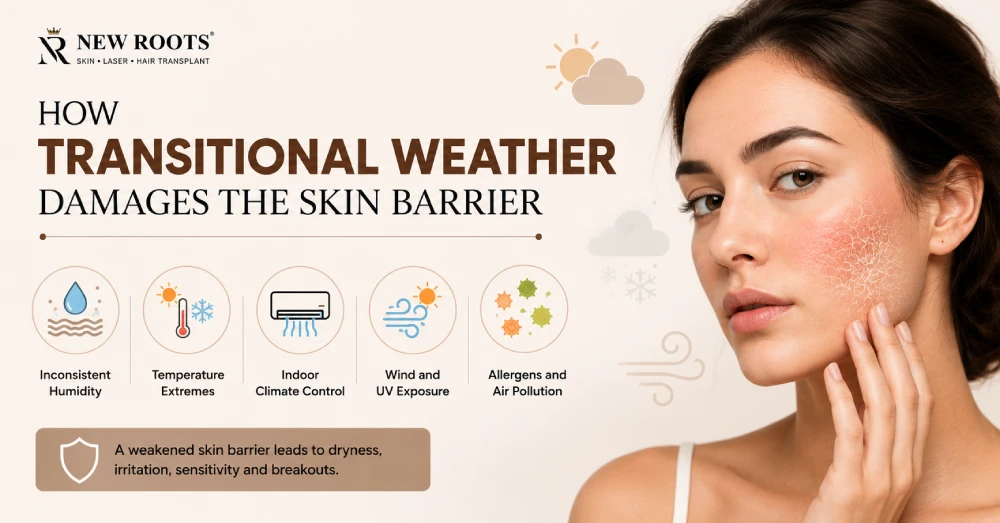
How Transitional Weather Damages the Skin Barrier
Being in transitional weather conditions in a climate-diverse state like Karnataka could prove to be very damaging for your skin barrier.
The rapid changes in temperature, humidity, and environmental factors hinder your skin from adjusting fast enough, causing stress, imbalance, prematurity, and other visible issues linked to skin barrier damage, dryness, and irritation.
During the seasonal shift, the skin transitions, and the skin barrier is exposed to many attractors.
1. Inconsistent Levels of Humidity
Humidity levels change drastically in Karnataka while transitioning from monsoon to winter or from summer to monsoon.
If the humidity levels are low (as in winter), your skin undergoes excessive transepidermal water loss (TEWL), resulting in moisture loss, tightness, dryness and irritation, and cracking caused by skin barrier damage.
During high humidity (during the monsoons), excess sebum can clog pores and cause blemishes. These erratic conditions inhibit natural moisture regulation by the skin, thereby causing a great deal of stress to the skin barrier, increasing dryness and irritation.
2. Temperature Extremes
Sudden transitions involving hot days and cool nights characterize the seasonal period.
Heat opens up pores and increases sebum (oil) secretion, making skin greasy and prone to acne, further contributing to skin barrier damage.
Cold air tightens pores and robs skin of natural oils, making it dry, sensitive, and irritated, increasing dryness and irritation. Constant change against the skin confuses it and weakens its protective skin barrier while slowing down cell turnover.
3. Indoor Climate Control
Air conditioners and heaters make them feel comfortable and dry the environment out. Such systems reduce humidity inside while making the skin feel tight, dry, and flaky signs of skin barrier damage and increased dryness and irritation.
Prolonged exposure further increases skin barrier damage, drawing out the moisture that is affected with it.
4. Wind and UV Exposure
In places of higher altitude, like Coorg or Chikkamagaluru, the wind is the last thing to take away humidity from the skin, leaving it dry and raw or windburnt, a common form of skin barrier damage.
UV rays cut through clouds and glass to do barrier damage and prematurely age the atmosphere all year-round, not just in summer, worsening dryness and irritation.
5. Allergens and Air Pollution
Winter and summer increase pollen, dust, and smog levels. A very strong skin barrier can perhaps prevent these irritants.
Once compromised, however, your skin starts getting allergic, allowing allergens to penetrate deeper and trigger itching, dryness, and irritation, or even allergic responses linked to seasonal shift skin.
How Different Skin Types React to Seasonal Changes
Seasonal transitions will affect every skin type differently. Understanding how your skin reacts will help you better tailor your skincare regimen effectively for seasonal shift skin challenges and prevent skin barrier damage, dryness, and irritation.
- Dry Skin
Dry skin simply lacks the required oil and moisture; that makes it even more susceptible to skin barrier damage during weather changes. In cold and dry weather, it would mostly feel tight, itchy, and may even start peeling, classic signs of dryness and irritation caused by a compromised skin barrier.
Rich emollients and occlusives, such as shea butter or squalane, are needed to lock in hydration, restore the skin barrier function, and combat seasonal shift skin effects.
- Oily Skin
Oily skin may seem more resilient, but it has its own seasonal struggles linked to skin barrier damage.
In humid conditions, oil production increases, often leading to clogged pores and breakouts, which further aggravate dryness and irritation.
To the surprise of many, dry or cold air dehydrates; therefore, the skin compensates by producing more oil, which only worsens the unbalanced state of seasonal shift skin and can weaken the skin barrier.
- Combination Skin
Combination skin, oily in some areas, dry in others, can be tricky during seasonal skin.
Weather changes often make it harder to balance both needs, requiring customized care for each zone, like light moisturizers on the T-zone and richer ones on dry areas to protect the skin barrier and soothe dryness and irritation.
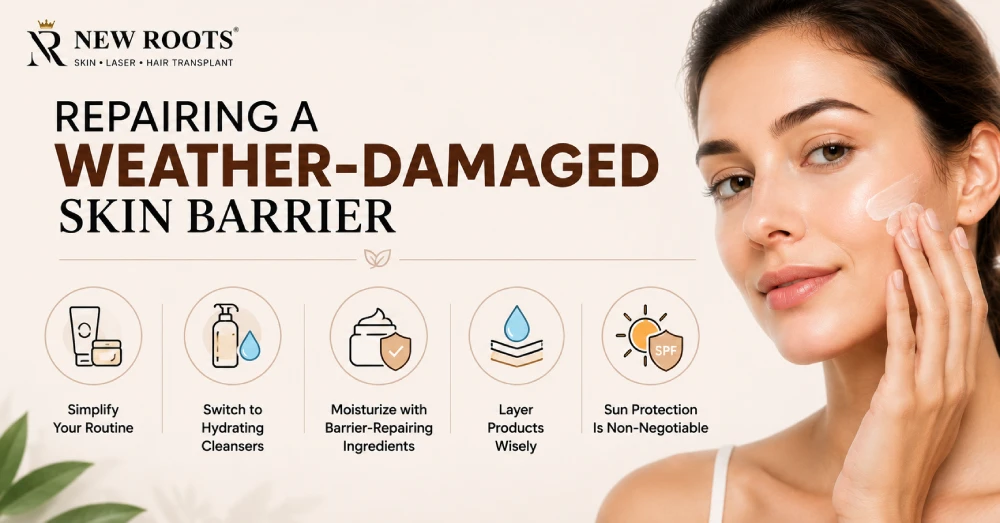
Repairing a Weather-Damaged Skin Barrier
When your skin barrier is damaged due to seasonal shift skin, the key to healing lies in simplifying and strengthening your routine. Here’s how you can restore balance and resilience:
1. Simplify Your Routine
Avoid overwhelming your skin with multiple active ingredients like retinol or AHAs/BHAs during transitions, which may worsen dryness, irritation, and skin barrier damage.
Stick to gentle, hydrating products that nourish rather than exfoliate or irritate. Let your skin barrier recover without additional stress.
2. Switch to Hydrating Cleansers
Choose sulfate-free, pH-balanced cleansers that cleanse without stripping natural oils and causing skin barrier damage.
Avoid foam-heavy or harsh cleansers, especially in dry seasons, to minimize dryness and irritation. Look for milky or gel-based cleansers that support hydration and help maintain a healthy skin barrier.
3. Moisturize with Barrier-Repairing Ingredients
Opt for moisturizers packed with ceramides, hyaluronic acid, niacinamide, panthenol, and squalane to repair and strengthen the skin barrier.
Use richer creams in colder, drier months to fight dryness and irritation, and choose lightweight, non-comedogenic lotions during humid seasons to prevent further skin barrier damage.
4. Layer Products Wisely
Proper layering locks in hydration and prevents moisture loss, which is essential to avoid dryness and irritation caused by skin barrier damage.
Start with a hydrating toner, followed by a serum, then a moisturizer, and finally an occlusive (like a balm or facial oil). This method strengthens the skin barrier while sealing in moisture.
5. Sun Protection Is Non-Negotiable
UV rays can damage your skin barrier year-round—even on cloudy days or indoors—exacerbating seasonal shift skin problems and increasing dryness and irritation.
Use a broad-spectrum SPF 30+ daily to prevent further skin barrier damage and premature aging.
Lifestyle Habits to Boost Barrier Strength
A strong skin barrier isn’t forged only in a lab; it is sculpted through your daily lifestyle and working habits. Simple lifestyle choices help maintain healthy and resilient skin during seasonal shift skin transitions and protect against skin barrier damage, dryness, and irritation.
- Keep Hydrated: Ensuring that you stay well hydrated from within reflects on your skin moisture and helps avoid skin barrier damage. Drinking 2-3 liters of water daily is commendable, especially during dry or windy weather.
- Eat Skin-Friendly Foods: Omega-3-rich foods like flaxseeds, chia seeds, and walnuts; vitamin C-rich foods like citrus fruits, amla, and bell peppers; and zinc sources such as pumpkin seeds and lentils help repair the skin and strengthen the skin barrier.
- Get Enough Sleep: Quality sleep is essential as the skin repairs and regenerates overnight. Poor sleep disrupts this repair cycle and weakens the skin barrier, increasing dryness and irritation.
The Importance of Barrier-First Skincare in Karnataka’s Climate
The importance of barrier-first skincare in Karnataka’s diverse climate, from coastal humidity and chills in hill stations to dryness in the city, cannot be overstated.
A barrier-first routine means using products tailored to your local environment to avoid skin barrier damage, dryness and irritation, and seasonal shift skin problems.
Dry winters in Bengaluru require heavier moisturizers, hydrating serums, and indoor humidifiers to prevent transepidermal water loss and maintain the skin barrier.
In coastal areas like Mangalore, where humidity is high, lightweight, non-comedogenic moisturizers and mattifying sunscreens help prevent clogged pores and skin barrier damage.
Hill stations like Coorg see sudden temperature drops that require barrier-repair serums, hydrating mists, and occlusives to lock in moisture and combat dryness and irritation.
When to See a Dermatologist
If your skin continues to struggle despite consistent skin barrier repair efforts, professional intervention may be necessary. Chronic redness, eczema flares, or painful acne can indicate deeper issues caused by persistent skin barrier damage.
A dermatologist may recommend stronger moisturizers, patch testing for allergens causing dryness and irritation, or treatments like hydrafacial or LED therapy to restore your skin barrier safely.
Final Thoughts
The skin barrier acts as your body’s first defense and takes a hit during seasonal shift skin changes. First comes the skin barrier damage, followed by dryness and irritation, with every sign of discomfort. The good part is that the skin can be revitalized with generous care.
Focus on climate-smart skincare and a barrier-first strategy to enjoy healthy, resilient skin that glows all year round despite seasonal shift skin challenges.
FAQs:
The skin barrier is made up of elements at the outermost level, or stratum corneum, that protect against penetration from water, allergens, pollutants, or bacteria. It acts like a wall of cells against lipids, retaining water and smoothness on the skin surface.
Transitional weather, for example, going from monsoon to winter or summer to autumn, varies in temperature, humidity, and wind. All these changes disturb the skin barrier, causing dryness, sensitivity, redness, or even breakouts. There is inflammation and discomfort because the skin cannot adapt fast enough.
If your skin feels permanently dry and tight or irritated whenever the weather changes, that’s a clue that you may have a compromised barrier. Redness, flaking, stinging when putting on products, and sudden breakouts are other signs. Such conditions tend to make their presence felt during seasonal shifts.
Choose products containing ceramides, hyaluronic acid, niacinamide, squalane, and panthenol as they help in rebuilding the lipid matrix, locking in moisture, and calming inflammation. Avoid harsh exfoliants or drying alcohols during this period.
Certainly, yes! UV rays filter through clouds and glass windows and wreck your skin barrier any time of the year. So, you should put on a broad-spectrum SPF 30+ irrespective of the weather.


