

Table of Contents
Winters in Telangana are a no-nonsense affair, characterized by the deadly sun that scorches the land, making UV levels rise needlessly high. The dust settles slowly upon the cities of Hyderabad, Warangal, Karimnagar, and Nizamabad.
In the harsh season, your skin not only tans but also ages. One of the most common signs is the age spots- uncomfortable dark spots, uneven patches that make their slow appearance on your face, hands, shoulders, and arms.
But why is it that these sunny, dusty summers seem to worsen the condition? From observing age spots becoming more blotchy or speckled every few weeks spent in the summer heat, you are not mistaken.
The unique climate of Telangana, dry, has a large role to play in the exacerbation of the age spots. Let us delve into why it happens and how UV damage and exposure to sunlight are the main perpetrators, and then finally, how to protect your skin.
What Are Age Spots?
Age spots are flat brown, gray, or black markings on the skin, also called liver spots or solar lentigines. These spots arise higher with sun exposure and are commonly seen in the population above 40 years, but mosquitoes in younger populations of sun-rich areas, such as Telangana, are increasingly reporting them.
The primary cause of the age spots is melanin, a pigment responsible for the color of the skin. With UV exposure, melanin production is increased excessively.
Hence, clusters of melanin appear in some spots, creating irregular pigmentation of the skin. Though age spots do not pose any harm, they clash with the surface beauty and are an indicator of serious sun damage.
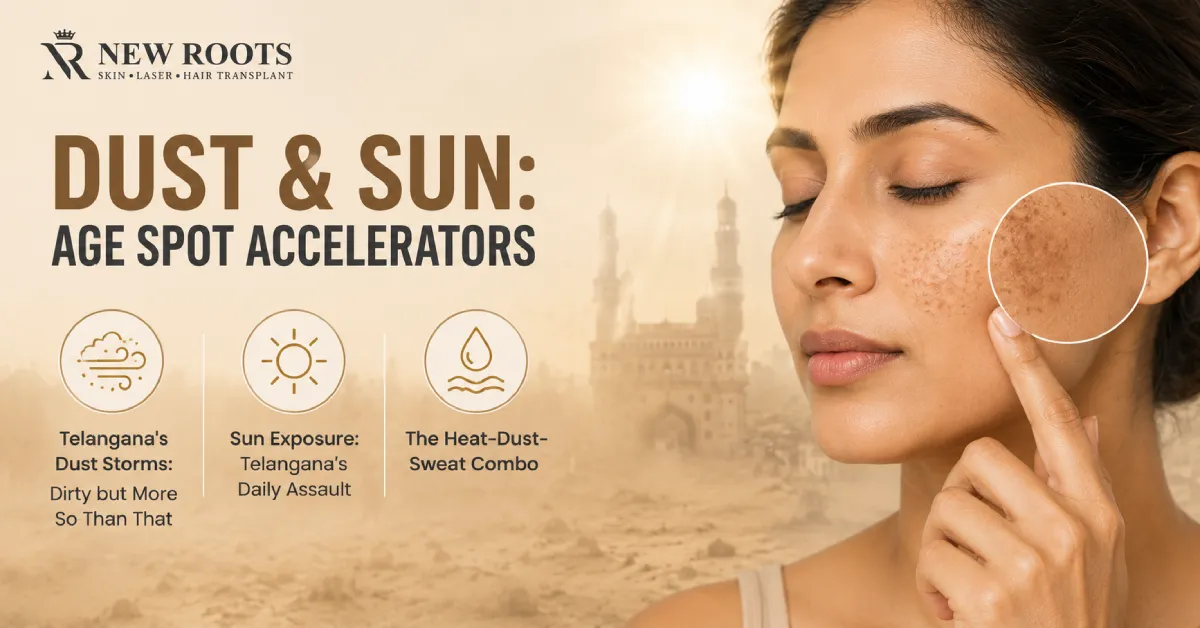
Dust & Sun: Age Spot Accelerators
Summers in Telangana do not only carry unbearable heat; they bring with them a cocktail of skin-hostile things that synergistically speed up the formation of age spots.
The environment poses stress upon your skin, with some rumbling dust storms, intermittent UV from the sun, and perspiration. So how do all these put together give pigmentation and an aged look to your skin?
1. Telangana’s Dust Storms: Dirty but More So Than That
Dust storms and hot, dry winds called loo are common phenomena from late March to June in Telangana. This sets a micro-environment with airborne pollutants and fine dust that directly settles on your skin.
Dust particles clog pores, emanating inflammation, irritation, and oxidative stress. This kind of inflammation in the skin spurs melanocytes, the pigment-producing cells, to produce melanin overproduction, which causes pigmentation and uneven skin tone.
Worse still, the fine dust particles work like a magnifying glass, increasing the penetration of UV rays into the skin. Sun damage is thus aggravated, and the onset of age spots is hastened, age spots being flat, brownish patches that fade into view with every summer. Explore customized treatments at New Roots Skin, Hair & Laser Clinic to stay ahead of neck ageing before it catches you by surprise.
2. Sun Exposure: Telangana’s Daily Assault
Telangana’s geographic and climatic conditions result in extremely high UV levels, often above the safe threshold. During peak summer, temperatures routinely rise above 40°C, with the UV index varying widely from “very high” to “extreme” (levels 8–11+), especially in April and May.
Making 95% of UVR, UVA penetrates deep into the dermis, destroys collagen, and causes long-term pigmentation. UVB rays affect the outermost layer of the skin (epidermis), causing immediate sunburn, melanin production, and pigmentation.
The UVA and UVB rays stimulate melanogenesis, which is the natural pigment formation response of the body to sun damage, which then causes uneven pigment formation.
Any small exposure to UV radiation between 10 AM and 4 PM, that being the window of the maximum UV intensity, may be enough to add up to skin damage when one is either outdoors or near a sunlit window.
That leads to faster development and darkening of age spots on exposed parts of the body, such as the face, the arms, the shoulders, and the neck.
3. The Heat-Dust-Sweat Combo
Telangana’s summer doesn’t attack your skin in isolation. It combines oppressive heat, gritty dust, and heavy sweating, creating a perfect storm for skin damage.
- Sweating dilutes and washes away sunscreen and skincare products, reducing their effectiveness.
- Heat dilates blood vessels and increases skin permeability, making it more reactive and vulnerable to UV damage.
- The combination of sweat and dust forms a sticky film on the skin, which traps heat and pollutants. This leads to photosensitivity, meaning your skin becomes more reactive to sunlight and develops spots more easily.
This harsh environment not only accelerates the formation of age spots but also makes existing spots darker and more pronounced.
UV Damage: The Root Cause of Hyperpigmentation
The root of all pigmentation-related problems is UV radiation. Exposure to the sun in small amounts every day without protection slowly changes skin tone and texture forever.
Here’s how it happens:
- UVA is known for penetrating the dermis, where it ages skin in the long term and causes pigmentation to build up.
- Both UV rays induce the formation of melanin, which then clusters to form spots or age spots that do not fade easily with time.
- Both types of rays stimulate melanin production. Over time, this leads to clusters of pigment or age spots that don’t fade easily.
In Telangana’s feisty climate, docile exposure to the sun, such as walking to your car or sitting beside a window, accumulates to give rise to pigmentation. Therefore, defense against UV-related skin damage must go along with consistent sun protection and skincare all year round.
Risk Factors in Telangana That Make Age Spots Worse
1. Outdoor Occupations
Many residents in Telangana work in agriculture, construction, or transport sectors that require prolonged exposure to direct sunlight. Without adequate sun protection, the skin experiences daily micro-trauma that culminates in visible age spots.
2. Urban Heat Island Effect
Cities like Hyderabad trap more heat due to concrete infrastructure, increasing surface temperatures, and UV reflection. This phenomenon leads to:
- Extended sun exposure even during the early evening.
- Higher infrared and UV radiation absorption by the skin.
- Faster skin ageing in urban areas compared to rural Telangana.
3. Inadequate Sun Protection Culture
There’s still a cultural hesitation among many to use sunscreen daily—especially among men or people with darker skin tones, under the misconception that melanin is enough to protect them.
But melanin doesn’t prevent age spots; in fact, uneven melanin response can worsen pigmentation in brown skin.
Common Myths About Age Spots in Telangana
Myth 1: Age spots are an affliction of the elderly
Many regard age spots as appearing after fifty years, but in the harsh climate of Telangana, that’s utterly false.
Due to constant sun exposure, people in their twenties and thirties are getting pigmentation that is easily visible to the naked eye.
Very high UV indexes in cities like Hyderabad and Warangal make melanin generation way quicker, thus presenting early signs of sun damage, such as age spots.
Myth 2: Sunscreen is for the beach or when you are on holiday
One of the most common crimes committed against skincare is not applying sunscreen on normal working days. It is a rare thing to see people applying sunscreen at other times except when preparing for holidays.
UV levels, however, are dangerously high in Telangana whenever you are outside, even if for a short trip or a casual commute back home.
Therefore, sunscreen must be applied whenever you step out to get groceries or work inside near any window!
How to Prevent Age Spots During Dusty Telangana Summers
1. Use Broad-Spectrum Sunscreen (SPF 50+)
Choose a broad-spectrum sunscreen that blocks both UVA and UVB. Reapply every 2-3 hours, especially if you sweat. Look for formulas that are:
- Water-resistant
- Sweat-proof
- Non-comedogenic (won’t clog pores)
Pro tip: Apply sunscreen 15-20 minutes before stepping out and don’t forget often-missed areas like ears, neck, and hands.
2. Cleanse Twice a Day
Remove sweat, dust, and pollution with a gentle but effective cleanser. Avoid harsh scrubs that irritate the skin, leading to more pigmentation.
Use micellar water or non-stripping gel cleansers to maintain skin barrier health.
3. Wear Physical Protection
- Wide-brimmed hats, UV-filter sunglasses, cotton scarves, or dupattas protect exposed skin.
- Choose long sleeves and full-length pants in light-colored, breathable fabrics.
- Avoid dark clothes—they absorb more heat and UV radiation.
4. Incorporate Antioxidants in Skincare
Use Vitamin C serums or creams with niacinamide or ferulic acid. These ingredients:
- Brighten the skin
- Reduce melanin overproduction
- Fight free radical damage from UV and pollution
5. Avoid Peak Sun Hours
Limit sun exposure between 10 am and 4 pm. If you must step out, stay in shaded areas or carry an umbrella.

Treatment Options for Existing Age Spots
It is a relief to know that if age spots have already set in, they can eventually be lightened or removed with the right care and treatments.
Dermatologists provide a wide range of effective treatment options, based on the severity of pigmentation and skin type.
Topical Creams
With enough consistent use, either prescription or over-the-counter creams can lighten age spots. Some of the more common ingredients include:
- Hydroquinone: A strong skin-lightening agent that prevents the production of melanin.
- Retinoids (such as tretinoin): They help speed up skin cell renewal and will fade the pigmented areas with time.
- Kojic Acid: A natural chemical extracted from some fungi and said to be an inhibitor of melanin production..
These creams need to be applied consistently, and one can expect to see results after weeks of usage. Also, an application of broad-spectrum sunscreen is a must, as treated skin tends to get more sensitive to UV rays.
Chemical Peeling
The peel, consisting of glycolic acid, lactic acid, or salicylic acid, acts by sloughing away the outer layers of the skin and thereby reducing some visible pigmentation with an added advantage of some lightening and evening out tone. Significant results from these procedures do require multiple sittings.
Laser Therapy
The stubborn or hard-to-treat age spots are best handled with laser treatments. This procedure targets melanin in the skin, causing the area of pigmentation without inflicting injury to the surrounding tissue. Being a fast treatment with dramatic results, this procedure should always be done by professionals.
Cryotherapy
By this said approach, the age spots are frozen with liquid nitrogen, causing their superficial layers to peel off. It is a quick process and effective for small, well-defined spots; however, it cannot always be recommended depending upon the patient’s skin type, particularly when prone to scarring.
What Dermatologists Say in Telangana
Dr. M. Radhika, a dermatologist based in Hyderabad, shares:
“I see a spike in pigmentation and age spot complaints from March to June. People think it’s just tanning, but many times it’s irreversible melanin clustering caused by UV damage. Prevention is key—daily SPF, even if you’re not planning to be outdoors.”
Home Remedies: Do They Work?
Natural treatments like aloe vera, turmeric, or lemon juice are widely used in Telangana homes. While they may offer mild brightening over time, they are not reliable solutions for fading age spots and may cause skin irritation or photosensitivity if misused.
If you choose to try home remedies:
- Use them only at night
- Always apply sunscreen the next day
- Monitor your skin for irritation or allergic reactions
Remember: Natural doesn’t always mean safe—consult a dermatologist before trying DIY treatments for pigmentation.
Final Thoughts: Telangana’s Summers Demand Skin Vigilance
Summers in Telangana have their share of beauties, but they still tend to cause undue harm to your skin. With this trio of UV rays, heat, and dust, age spots become inevitable unless a good skincare routine is put into place.
The good news is: they can be slowed down, lightened, or completely prevented by smart sun habits. Protecting your skin from UV damage is the very first defense against premature ageing in this harsh climate.
Whether you live amidst the urban sprawl of Hyderabad or in semi-rural Nalgonda, one thing is clear: age spots cannot survive when you put protection for your skin in place all through the year, not just in the summer.
FAQs
Age spots worsen during the summer in Telangana because of intense UV radiation, high temperatures, and dry dusty air. The UV rays cause an increase in the melanin production, while dust particles clog the pores, thereby limiting the sunscreen’s efficacy, culminating in darker and more stubborn pigmentation.
They do. The melanin in darker skin offers some natural protection, but it does not prevent age spots. Further, due to the uneven distribution of melanin in brown skin, the spots might appear darker and more visible, especially with repeated exposure to sunlight.
Yes, sunscreen is a must in Telangana even when working indoors. UV rays traverse through windows, thus making indoor exposure to UV radiation contributive to direct skin damage. Wearing broad-spectrum sunscreen of SPF 30+ or 50+ daily is the best way to prevent age spots and long-term UV damage.
They may offer minor lightening that is temporary at best, but they are not scientifically proven methods of treating age spots effectively. Even worse, some natural ingredients (such as lemon juice) can increase photosensitivity, increasing the risk of further sun damage if not used with care.
Age spots can be significantly reduced or removed using treatments like laser therapy, chemical peels, or prescription creams. However, if sun protection isn’t maintained, new spots may appear. Prevention through consistent UV protection is the most effective long-term strategy.


