
Table of Contents
Crown Thinning? Hair Transplant Solutions
Get thicker hair back and improve your well-being with modern enhancements for crown hair loss.
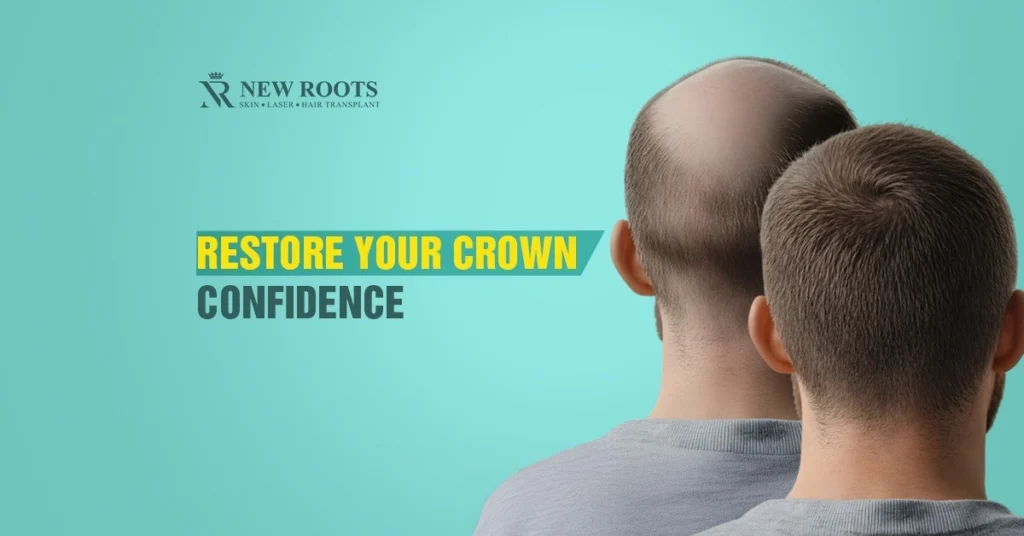
This section of the head is known to be experiencing hair loss; therefore, it requires particular techniques to avoid having an artificial look or see-through hair.
Learn more about how our squad is capable of restoring hair density and confidence in patients regained again through proper hair restoration techniques.
We do present modern invigorated services according to the requirements of those who are suffering from crown thinning and get the best and permanent treatment.
Enjoy the natural beauty of a restored hairline and youthful look through the proven transplant techniques of Lexington. If you have a legal issue, then it is about time that you call for a consultation session to learn about the possibilities.
Introduction
Are rubbles fast making their way to your crown line? Do you observe that when you look in the mirror or comb your hair, you see more of the scalp than hair?
If so, you might be having a problem known as crown thinning, which is rather usual for many males and some females as well.
But do not despair; this is not the case with you, and, more to the point, there are practical remedies out there!
This article dives deep into the world of crown-thinning hair transplant procedures, offering easy-to-understand information and friendly advice to help you navigate your hair restoration journey.
What Might Be Making the Crown of My Hair Thin?
There are various possibilities as to why a man might have hair on top of the head that is less dense than the side and back of his head.
Androgenetic alopecia, or pattern baldness, wherein the hair thinning at the crown or receding hairline is the most common cause.
Some of the other reasons that may cause hair loss include stress, hormones, and poor diet, and it is generally known as diffuse hair loss. The main cause of hair loss must be detected early to recommend a suitable solution.
What is crown thinning? Why Does It Occur?
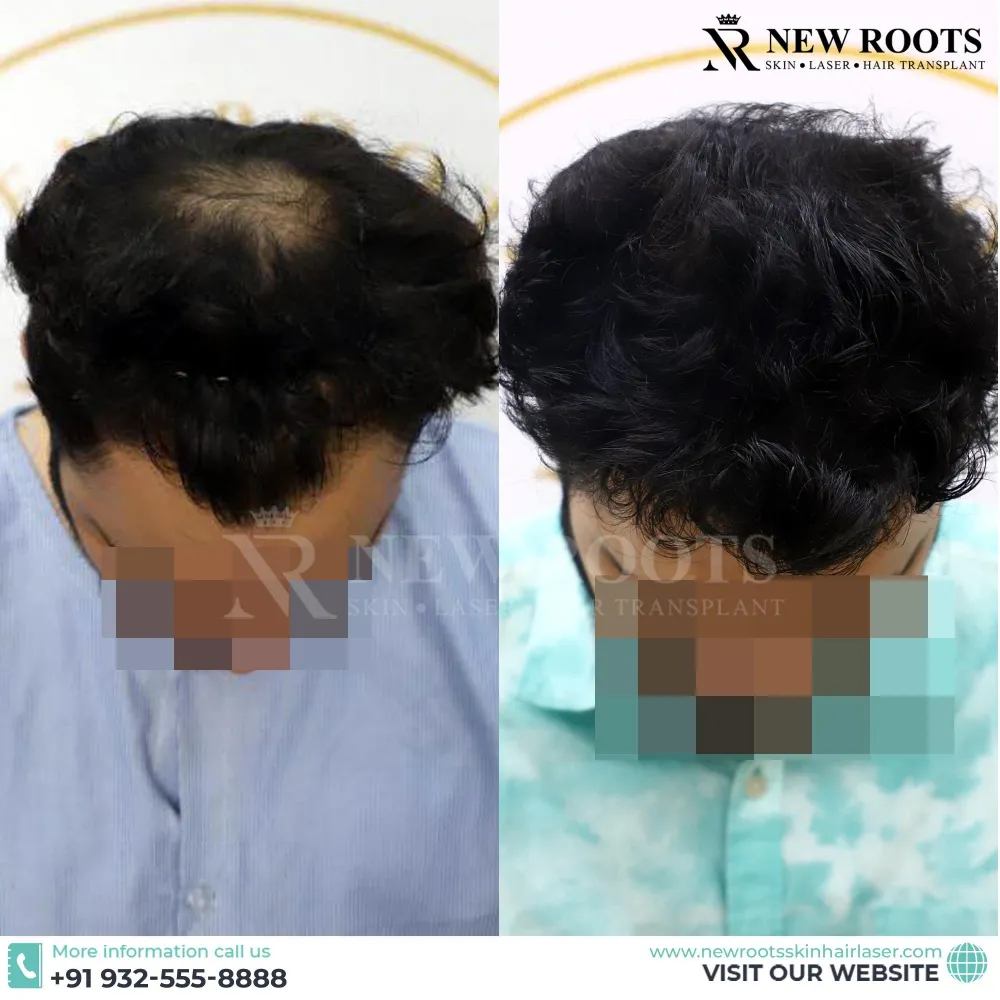
Miniaturization is commonly defined as thinning on the vertex, which is the crown area of the scalp, to become bald gradually. The most common cause of this type of hair loss is genetic and hormonal factors, with hormones being DHT.
DHT affects the hair follicle to produce thinner and shorter hair, rather than the baldness that occurs regularly after some time, or may remove them altogether. This is aside from other causes that would lead to thinning of the crown, such as the following:
Stress: It is widely known that pressure can cause hair to fall out due to anxiety.
Medical Conditions: Hair loss occurs because of diseases and remedies that affect the body.
Bad Vitamins: Malnutrition and/or other deficiencies in positive nutrients need to be properly understood because they appreciably influence hair fitness.
What are the different techniques for crown thinning hair transplants?
Several techniques are used for crown thinning hair transplants, each with its advantages:
Follicular Unit Extraction: This is done by harvesting individual hair follicles from the scalp and implanting them in the crown area. FUE also has no linear scar and often takes a shorter time to heal than other hair restoration surgeries.
Follicular Unit Transplantation: Also referred to as FUE, FUT involves shaving a strip of skin from the donor area, dissecting it into individual follicular units, and finally transplanting them at the crown. It is also necessary to note that FUT can be useful in case of extensive baldness.
Direct Hair Transplant: This method implies that hair follicles are transplanted into the bald areas of the scalp without prior creation of slots. This may enhance the survival rate as well as the accuracy of the graft placement.
Why Does the Crown Area Need More Hair in a Crown Hair Transplant?
Crown hair transplantations are said to require more hair compared to other areas in the head, such as the anterior area. This is due to the orientation of the crown to the observer of its image.
Regarding the crown, you view it from the upper part downwards, which means more scalp is exposed. All of them point in your direction, and as a result, the circumference of the hair shaft that is exposed from your perspective of the scalp is less.
What is the Crown Hair Transplant Procedure?
A crown thinning hair transplant involves several key steps:
Consultation: A thorough evaluation of your hair loss, discussion of your goals, and determination of the best approach.
Anesthesia: Epidural anesthesia is used to freeze the area of the scalp.
Donor Hair Extraction: Here, both follicles are harvested from the donor area through FUE or FUT.
Recipient Guidance: Tiny holes are made in the place of the crown where the transplanted follicles can be positioned.
Restoration: It’s vital to be aware that there are standard measures that need to be taken to achieve exceptional effects in the management of patients after the surgical procedure.
How long does it take to get over a Crown Hair Transplant?
The healing length after a crown-thinning hair transplant is important for ensuring the fulfillment of the system. Here is the information that one can usually anticipate:
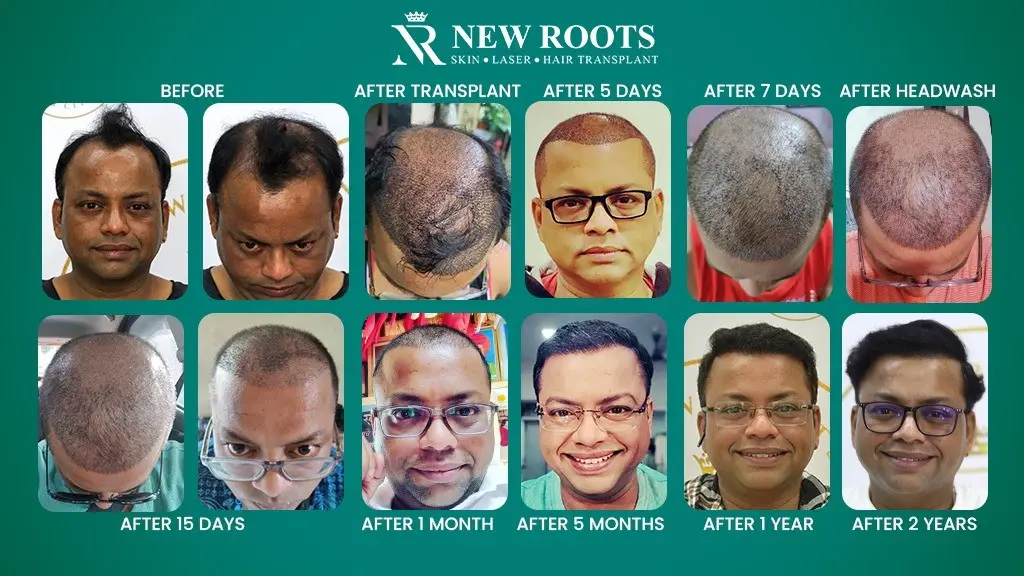
- First Few Days: Rest and avoid strenuous activities. This will help to ensure that your head is always raised when the head and neck are supported by the pillow.
- 1-2 Weeks: They will begin to peel in the initial primary form of scabs. I can also return to most normal activities, although some restrictions may be placed on the patient after a certain period following a concussion.
- 1-3 Months: The hair that has been transplanted will also go through the cycle of shedding, just like the other hair on the head.
- 3-6 Months: New hair growth will begin.
- 12-18 Months: Full results will be visible. People need to understand that replanted hair in the crown region of the head takes approximately 15-18 months for the hair to temper to calibrate.
What are the risks and capability complications of a Crown Hair Transplant?
As with any surgical procedure, crown thinning hair transplant incorporates a few dangers.
These can include:
- Infection
- Bleeding
- Swelling
- Scarring
- Itching
- Numbness
- Shock Loss
- Unnatural-looking results
Apart from these risks, they can be minimized by seeking the services of an experienced and qualified surgeon.
How Much Does a Crown Hair Transplant Cost?
The cost of a crown thinning hair transplant can vary widely depending on several factors:
- Extent of Hair Loss: This is because the larger the area that needs treatment, the more grafts will have to be used, and this will go a long way in inflating the costs.
- Technique Used: FUE is usually costlier than FUT per graft, depending on several factors, as we have discussed earlier.
- Surgeon’s Experience and Clinic Reputation: Experienced surgeons and good clinics will attract high prices as compared to inexperienced ones.
- Location: The costs associated with the clinic may differ depending on the area where it is located.
On average, a crown thinning hair transplant can range from
It ranges from 4000 to 10,000, and you might need 2 surgeries on the crown to get sufficient hair density. A few of the clinics provide customers with different payment packages to make it easier for them to afford the cost.
Personalized Treatment:
New Roots: Skin, Laser & Hair Transplant Clinic presents client-centered strategies to the problem and is focused on using an individual approach to selecting the further health treatment strategy.
Conclusion:
A crown thinning hair transplant offers a promising solution for restoring hair and confidence.
Knowing the causes of crown thinning, considering all possible treatments, and selecting an appropriate clinic such as New Roots, it is possible to regain control over the hair loss process and get natural, long-lasting results.
It is advisable to speak with a suitable surgeon to understand the best approach towards treatment for each patient.
Q&A ASK:
Yes, it’s effective. The transplanted hair is DHT-resistant and consequently has the propensity to grow over a long span and acquire a fuller and all-natural crown, thus enhancing self-esteem.
Cost: This depends on the number of grafted hairs and the method used in the procedure. To get the actual cost of a crown transplant, it is advisable to consult a clinic where you will be evaluated to see the precise expenses you would be charged.
Answer: Evidently, the first phase of healing should take about one to two weeks. Full growth can take 12-16 months. It is therefore important for anyone who would like to get the best results in terms of hair growth to ensure that they stick to the post-op instructions as advised.
Candidates who are in an optimal state of healthy hair loss, as well as have adequate donor hair, and evaluate the condition that results in thinning in the crown region for hair transplantation.
There is the possibility of bacterial/viral infections and keloid development; the final scar is not normally smooth and can be uneven. These risks are minimized when one hires the right professional for a hair transplantation surgery.


