

Table of Contents
The very essence of a successful hair transplant isn’t solely the hair you acquire on the scalp; it is almost the same with how the donor area post-hair transplant is preserved, healed, and protected.
A lot of patients put all their attention on the recipient area, but if there is a problem, pain, or inadequate management of the donor site, this might influence both the outcome and the comfort level negatively.
This manual describes the changes that occur to the donor area after a hair transplant, describes the process of healing, states the type of discomfort that is considered normal, and presents ways of managing recovery properly.
What Is the Donor Area in a Hair Transplant?
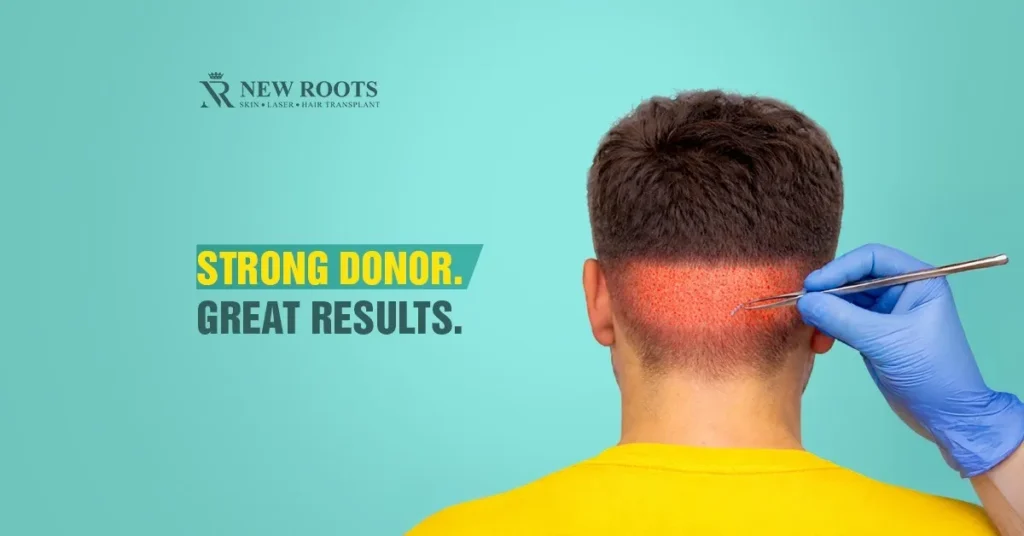
The donor area refers to the part of the scalp that is always hair loss resistant and thus is where hair follicles can be taken out without causing any change in the appearance of the area.
Generally, this area is located on the back and sides of the head, which are the places where one’s hair is naturally programmed to stay for the rest of one’s life without going through any cycles of growth and termination.
Hair follicles that are taken from this area for use in a hair transplant are first, of course, extracted and then, after that, are implanted into the regions of thinning or baldness. It is necessary to ensure the preservation of the density of the donor area because these follicles are limited in number.
How the Donor Area Is Used During Hair Transplant Surgery
Currently, there are two main methods of extracting hair follicles from the donor site: one that heals naturally and the other that heals more slowly.
- FUE (Follicular Unit Extraction)
A special micro punch tool is used to extract individual hair follicles. The tiny circular wounds from this method heal on their own without needing stitches. FUE is linked to less visible scars, quicker recovery, and no or very little pain in the donor area after the transplant. - FUT (Follicular Unit Transplantation)
The scalp is removed in a strip from the donor site through surgery, and sutures are applied to close the site. A linear scar is left by this method, which is eventually covered in skin over several weeks, but with very short cuts, it might still be visible.
FUE is the more common choice of most modern clinics as it promises faster recovery for the donor area and less is seen of the scars left behind.
Hair Transplant Donor Area Before and After: What Changes?
Before any procedure, the donor site’s skin is intact, and its hair density is evenly distributed. Right after the operation, the area might exhibit:
- Small red dots or scabs
- Little swelling
- Short-term sensitivity
In the case of hair transplant donor areas, the initial reduced density is a common observation during the comparison. Yet, if the extraction is done properly, this change will be hidden by the surrounding hair after the healing process is over.
Only in the case of unskilled donor area hair transplant planning or overharvesting, permanent thinning occurs.
What happens to the donor area after a hair transplant?
Comprehending the healing phases of the donor site not only aids in lessening the stress but also in having proper recovery expectations. The following is a common healing schedule that most patients go through.
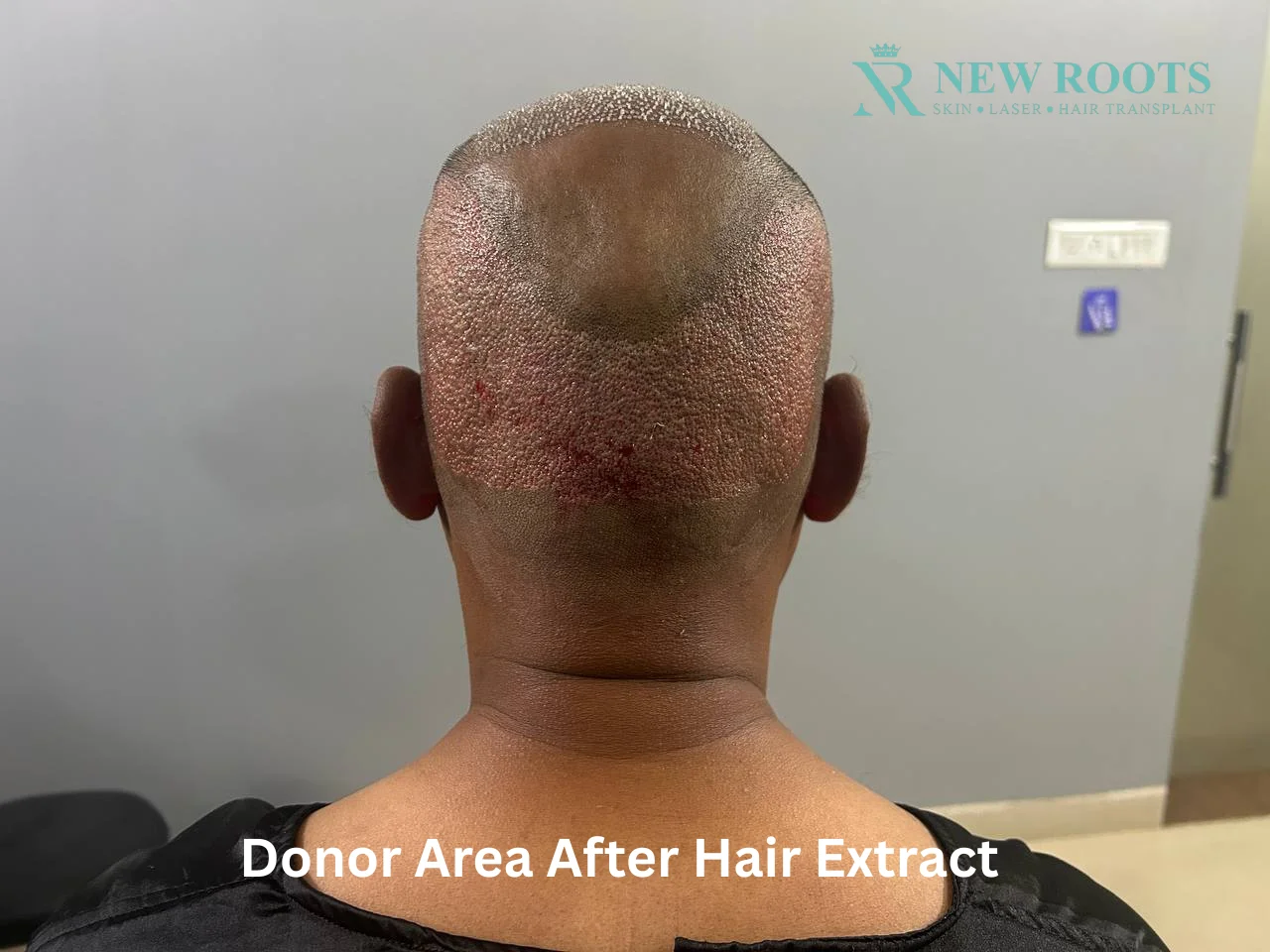
First 24–72 Hours
- Redness and small scabs appear at the sites where the hair was removed
- The tightness or soreness feeling is normal because of the healing going on
- Sometimes light bleeding or oozing occurs, which is normal
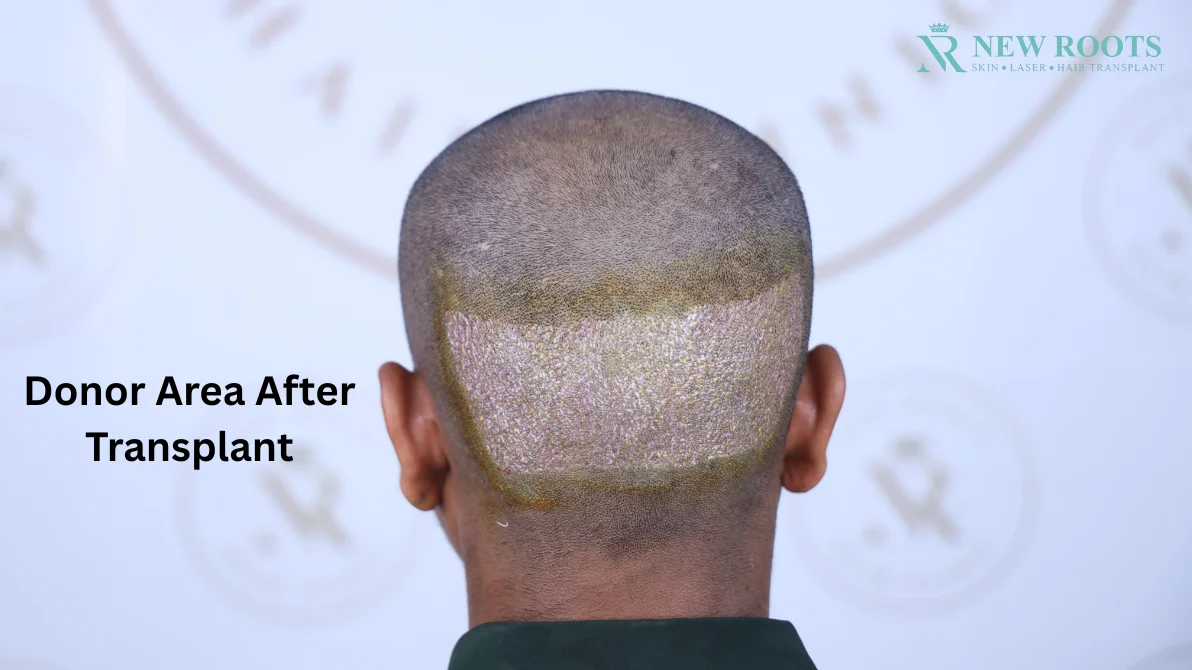
Days 4–10
- The scabs become dry and fall off on their own without any interference
- The redness starts to disappear slowly
- The healing process might lead to the appearance of itching
Weeks 2–4
- Skin texture becomes normal and looks more vibrant
- At the same time, the hair starts to grow around the extraction sites, thus giving better coverage
- The feeling of being sensitive becomes less and less
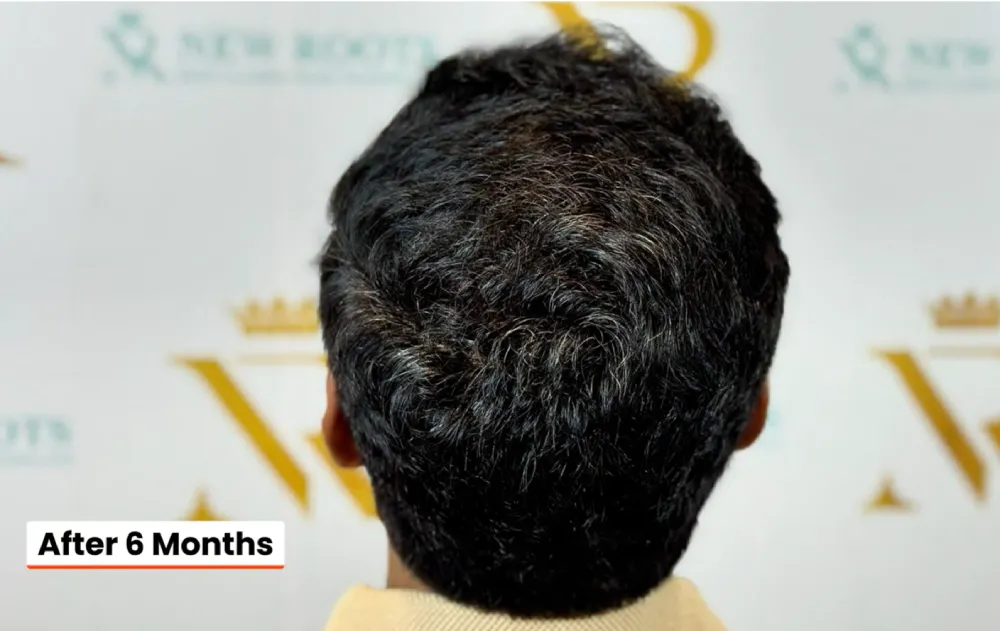
Months 3–6
- The donor hair is not only grown but also blended in with the other hair in a natural way
- The thickness of the hair remains the same
- The skin looks the same as before the operation
This is just an estimate for healing in the hair transplant donor area, but still, individual recovery might take a longer or shorter time depending upon factors such as skin type and good aftercare.
Pain in Donor Area After Hair Transplant: Is It Normal?
Indeed, post-hair transplant pain in the donor area is a common occurrence, especially during the first days after the surgery. The intensity and the time of discomfort vary among individuals and are mainly dependent on a number of factors.
Factors Affecting Pain Levels
- The number of extracted grafts, larger sessions tend to produce more soreness
- Skin sensitivity and healing response of the individual
- The method of extraction employed
- Post-surgical care and compliance with the instructions given
Normal Pain Characteristics
- Mild soreness or aching feeling
- Tightness in the area where hair was taken
- Sensitivity to touch or pain during movement
Such pain is regarded as normal and usually goes away in 3–7 days as the donor area recovers and swelling decreases.
Severe Pain in Donor Area After Hair Transplant: When to Be Concerned
In no case should a significant pain in the donor site after hair transplantation be considered normal; instead, it might signify a serious issue, for instance:
- The germs get into the skin
- Too much inflammation
- Nerves being irritated
- Not taking care of the wound properly
Mild soreness that slowly gets better is different from severe pain that is still there and even worse after day 3; the latter should not be overlooked.
If the pain comes with fever, more swelling, reddening, hotness, or discharge from the donor area, then it is very important to get a medical check-up right away in order to avoid complications and guarantee correct healing.
Pimples on Donor Area After Hair Transplant: Causes and Treatment
Numerous individuals who have undergone hair transplant surgery see little bumps on the donor region throughout the recovery period. Those bumps are normally non-threatening and are caused by:
- Ingrown hairs
- Blocked follicles
- Excess oil production
- Healing inflammation
What to Do
- Do not scratch or pop pimples
- Clean gently with the prescribed shampoo
- Use antibiotics only if advised
These pimples generally disappear by themselves after a few weeks.
Hair Transplant Donor Area Recovery: Best Practices
Proper aftercare is the key factor for reaching maximum recovery.
First Week Care
Do not touch or rub the area
Lie on your side or back when sleeping
Only use the saline sprays or cleansers that have been recommended
Washing Guidelines
Light washing can be done after 48–72 hours
Hot water is not to be used
Dry the area gently—do not rub
Activity Restrictions
10–14 days of no gym, swimming, or sweating
No helmets or tight caps at the beginning
By adhering to this protocol, the recovery process in the donor site of the hair transplant will be faster, and the risk of complications will be lower.
Hair Transplant Donor Area Healing Time: What Is Normal?
Typically, the healing time for the hair transplant donor area will be in a predictable pattern on average, but the individual recovery could be different according to skin type, general health, and aftercare practices.
- Scabs: 7–10 days
Small scabs will be around the extraction points and will fall off by themselves. You should not pick or scratch because this can cause irritation and even infection. - Redness: 2–4 weeks
Mild redness is a normal thing, especially for light-colored or sensitive skin types. It gradually disappears as the scalp, which is the source of the redness, heals. - Sensitivity: up to 6 weeks
Softness, pressure, or slight numbness may be phenomena of tenderness that come and make temporary but not all of these feelings will disappear at the same time, since they all have different durations. - Full cosmetic recovery: 3–6 months
The donor area looks normal again, and the surrounding hair is providing the full coverage needed.
Healing might take more time for people with sensitive skin, who smoke, have underlying medical conditions, or are not compliant with aftercare. The adherence to the post-procedure instructions greatly enhances the recovery outcomes.
Poor Donor Area Hair Transplant: What Causes It?
A poor donor area hair transplant result is not commonly associated with the patient’s scalp or hair quality problems, but more so with technical or planning mishaps.
On the contrary, proper evaluation and accurate performance of the surgical procedure are what will maintain the donor density.
Common Causes
- Overharvesting of grafts is done beyond the limits that are considered safe
- Improper extraction spacing that leads to loss of density
- Unskilled surgical technique or poor performance
- Not considering the limits of the donor area during the planning phase
Signs of a Poor Outcome
- Clear patchiness is visible in the donor area
- Thinning that becomes permanent and does not get better over time
- Skin or hair texture that is not even
- Healing that is either delayed or incomplete
It is thus imperative to maintain the donor area for the long-term results, as they cannot be replaced/ restored once damaged or excessively removed.
Can Donor Area Hair Grow Back?
Certainly, during FUE procedures, the hair of the surrounding donor area grows in the same way as before and additionally assists in hiding the small extraction points.
On the other hand, the extracted follicles do not regrow, but still, proper planning and spacing assure that the post-healing donor area looks natural and full.
If the procedure is done by a skilled surgeon, then most patients will not have a situation where the donor area becomes invisible, has thinning, or has long-term changes in cosmetic aspects.
Long-Term Care for the Donor Area After Hair Transplant
The care that is to be done after the donor area heals is still necessary throughout the entire process to keep a healthy scalp and results that last over time. Good practice aids in avoiding the problems of thinning, irritation, and delayed complications that might arise long after the surgery.
Do’s
- Daily scalp cleansing with a gentle shampoo that dermatologists approve
- Protein-rich foods to eat to support hair strength and follicle health
- After the healing process is done, sun protection for the scalp is achieved by using hats or applying sunscreen
Don’ts
- Do not use strong chemicals like vigorous dyes or frequent chemical treatments
- Do not keep on scratching, as it can ruin the skin and follicles
- Do not go for extractions more than what is needed, since this may cause the termination of the donor’s site density
If the donor area is neglected in the long-term, it will become thinner and may also become more sensitive to the scalp, which might even be several years after a hair transplant procedure.
Final Thoughts
The donor area is the crucial part of any hair transplant. Learning how the donor area will be affected after the procedure, taking care of pain, controlling infection, and adhering to recovery guidelines will lead to comfort and long-lasting results.
Neglecting donor care can cause problems that could have been easily avoided, such as pain, acne, or even permanent thinning of hair.
With the right planning and strict aftercare, the donor site not only heals safely but also discreetly, so that the attention can be on the successful hair restoration.
FAQs: Donor Area After Hair Transplant
The donor zone is treated to mild scabbing, redness, and swelling after the surgical procedure. These are the healing process’s usual symptoms. Scabs will fall away in about a week, and the skin will slowly return to its normal state. The hair around the transplantation site will keep on growing, thus covering the point of extraction.
The answer is yes, pain of a mild to moderate degree in the donor area after hair transplant, for the first few days, is a pretty common phenomenon. It typically presents as aching or tightness and gets better in a week. The painkillers that are usually prescribed by the surgeon are quite effective in controlling the discomfort.
The healing time for the hair transplant donor area is usually 7–10 days for the surface healing. The redness may continue for 2–4 weeks, while complete recovery of skin texture and sensory function may take up to 3–6 months.
The occurrence of pimples on the donor area after hair transplant can be due to the blocking of follicles, hairs growing into the skin, or the inflammation of the healing process. They last for a short period and usually disappear without any treatment if the area is kept clean.
A poor donor area hair transplant is usually the result of overharvesting, wrong extraction methods, or insufficient graft spacing that causes the developed thinning or spotty areas to be visible.


