
Table of Contents
Telangana’s extreme heat, especially in summer, is driving a rise in heat-induced hyperpigmentation—a condition often confused with tanning or sunburn. The real issue is deeper: inflammation, heat stress, and sun damage to the skin that alter tone and texture over time.
While sun damage skin has long been linked to UV rays, heat alone is now recognized as a major cause—especially in hot, dry regions like Hyderabad and rural Telangana, where temperatures often exceed 40°C.
This makes sun-damaged skin a serious concern for women, outdoor workers, and those with medium to dark complexions.
Unlike temporary sunburn or tanning, heat-related pigmentation is stubborn and worsens without care. Chronic sun damage to the skin results from repeated exposure without protection.
This blog explores how Telangana’s climate triggers such changes and offers solutions to prevent and treat sun-damaged skin effectively.
Understanding Heat-Induced Hyperpigmentation
👉 What Is Heat Pigmentation?
Heat pigmentation—also called thermal melanosis or post-inflammatory hyperpigmentation (PIH) due to excessive heat—is a form of skin darkening caused by prolonged or repeated exposure to high temperatures, even without direct sunlight.
While sun-damaged skin is commonly associated with UV rays, heat alone can trigger melanocytes (the pigment-producing cells in the skin) to overproduce melanin.
This results in uneven skin tone, dark patches, and blotchy discoloration. Unlike typical sun-damaged skin caused by UV exposure, heat-induced pigmentation may occur indoors or in shaded environments where heat is still intense.
Understanding this form of sun damage to skin is crucial in regions like Telangana, where the climate itself becomes a stressor, adding to already existing risks of sun damage to skin through daily routines.
👉 Key Differences: Heat Pigmentation vs. Sunburn vs. Tanning
| Condition | Cause | Appearance | Timeframe | Reversible? |
| Heat Pigmentation | Infrared heat & inflammation | Persistent brown patches | Gradual onset | Slow |
| Sunburn | UVB rays | Red, peeling, painful skin | Within hours | Yes |
| Tanning | UVA exposure | Even darkening of skin | Days/weeks | Partially |
Why Heat Triggers Skin Discoloration
In the blazing heat of Telangana summers, temperatures almost always cross the 40°C mark, and the skin is under continuous attack not only from direct sun but also from the ambient heat radiated by roads, buildings, and moving vehicles.
This leads to persistent sun damage to the skin, even for those who try to avoid direct sunlight. Unlike UV exposure, which we usually associate with tanning or sunburn, IR heat or environmental warmth can silently harm the skin and worsen sun-damaged skin conditions.
That’s why many people in Telangana notice dark patches that persist, even when they remain in the shade, a sign that sun-damaged skin is not only about sunlight but about heat stress too.
Let us investigate the mechanism of heat pigmentation and why the climate in Telangana accelerates it.
👉 1. Melanin Overdrive Due to Heat
Excessive heat activates your skin’s defense mechanism. As the temperature on your skin surface rises, an enzyme such as tyrosinase gets activated, which in turn produces melanin—often called the pigment of skin color. You would see brown or gray patches on places where there is common heat exposure:
- Cheeks
- Forehead
- Upper lip
- Neck
- Back of hands
- Inner thighs (due to friction + sweat)
Rarely knowing, the infrared radiation from a hot surface or mechanized equipment can mesh with melanocytes to produce uneven pigmentation and long-lasting discolorations. In other events: An uneven skin tone and long-lasting discoloration.
👉 2. Inflammatory Response
Heat sounds the…slight inflammation-damaging waves. This inflammation causes a healing response with overdeposition of melanin in the deeper layers of skin, producing post-inflammatory hyperpigmentation (PIH).
The other type of pigmentation that is patchy and stubborn-to-tan opportunity lies mostly in the medium to darker skin. It is practically reversible in those skins.
👉 3. Sweat and Friction: A Double Blow
Dry heat in Telangana produces lots of sweat, and sweat is full of irritants like salt and urea. Friction generated by tight clothing creates microtears in the skin when combined with:
- Underarms
- Neck folds
- Groin and inner thighs
Over time, this results in darkened, rough patches that don’t fade easily.
👉 4. Urban Heat Traps and Poor Air Circulation
In the urban environment of Hyderabad, asphalt and metal surfaces absorb heat and re-radiate, creating “urban heat islands.” The skin, the face, and neck, especially, stand exposed to these pockets for hours.
Poor air circulation exacerbates the problem; it prevents the skin from cooling and perpetuates thermal stress.
To summarize, heat pigmentation in Telangana constitutes not merely a cosmetic concern but the manifestation of accumulated environmental stress on the skin.
Why Telangana Is Uniquely Affected
1. Climate Conditions
Telangana experiences a semi-arid to tropical wet and dry climate with torrid summer temperatures combined with low humidity.
The average daily temperature generally remains high, hovering between 35°C and 45°C from the months of March to June, with heat at the ground level getting even more intense. Heat and sun damage are accelerated by exposure to such temperatures for longer durations.
2. Outdoor Workforce
The sun and heat are not friendly when it comes to skin pigmentation, all-cause friction being the worst culprit. A bulk of the population works outdoors: farmers, construction workers, street vendors, delivery men, and so on.
3. Lack of Awareness
Many people associate darkening with tanning and do not realize the fact that their skin is being damaged at the cellular level. Tanning is generally even and reversible, whereas heat pigmentation is uneven and much more difficult to treat.
4. Traditional Remedies Can Backfire
Further pigmentation in the sun and heat/weather conditions can result from the use of common remedies intended to “brighten” the skin, including lemon, turmeric, or oils, without proper sun protection being applied.
The unorganized skincare market in Telangana features a lot of products that don’t provide UV or IR protection, thus making it an even bigger problem.
Signs You’re Experiencing Heat-Induced Pigmentation
If you live in Telangana and spend time outdoors during the hotter months, your skin might be showing signs of heat pigmentation without you even realizing it. Unlike regular tanning, which usually fades over time, heat-induced discoloration can be persistent and patchy.
Look out for the following warning signs:
- Brown or grayish patches that don’t fade with regular cleansing or exfoliation
- Discoloration in friction zones, such as the neck, underarms, groin, and inner thighs
- Darkening around the mouth, upper cheeks, or forehead, often mistaken for tanning or hormonal pigmentation
- Skin that feels slightly rough or textured, even after applying moisturizer
- Areas that remain dark long after summer ends, indicating deeper dermal pigmentation
These are not just cosmetic concerns—they are signs that your skin has undergone sun damage and heat stress, especially common in Telangana’s dry, high-temperature climate.
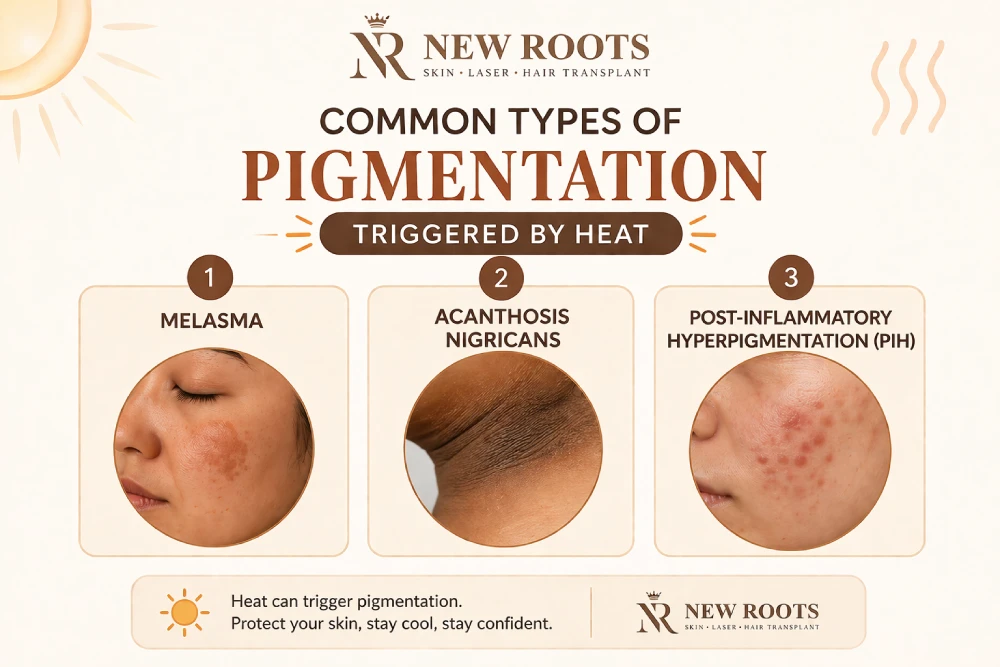
Common Types of Pigmentation Triggered by Heat
1. Melasma
Melasma appears as blotchy brown marks symmetrically placed across the face, usually on the cheeks, upper lip, or forehead. Sunlight, heat, and hormonal changes form a combination of triggering factors that act more on females, mainly during pregnancy or when dependent on contraceptives.
2. Acanthosis Nigricans
This typically presents as darkened, velvety skin in body folds, the neck, and the underarms, being a common site. Such pigmentations come with obesity or insulin resistance and are aggravated with sweat, friction, and heat, something that is so common with the summer weather in Telangana.
3. Post-inflammatory Hyperpigmentation (PIH)
These pigmentations appear following various forms of skin trauma- heat rashes, acne, insect bites from slight burn levels. Any mild inflammation can leave marks behind, mostly on darker skin tones, when left untreated.
This knowledge of disorders helps seek appropriate treatment and prevention of the consequences of long-term sun and heat damage.
How to Prevent Heat Pigmentation in Telangana
Staying in the scorching heat of Telangana is a must between March and July. Heat pigmentation and sun damage to the skin call for a well-planned skincare routine. Here are five must-know strategies for a severe climate:
👉 1. Broad-Spectrum Sunscreen Having IR Protection
People often just think of UVA and UVB rays, but long-wave infrared radiation, known as IR-A rays, can also cause melanin production and worsen heat pigmentation. Prefer a broad-spectrum sunscreen offering protection against UVA, UVB, and IR. Some critical ingredients to look out for are:
- Zinc oxide
- Titanium dioxide
- Antioxidants like Vitamin C, E, and Ferulic Acid
Apply roughly 20 minutes before going outside, and it should be reapplied every 3 to 4 hours or more frequently if sweating.
👉 2. Cover-Up Smartly
Now, the perfect crotch clothes make a hell of a difference. Use light, cotton fabrics on full sleeves of light colors, reflecting heat. Wide-brim hats protect the face and neck. Avoid synthetic fabrics, which trap heat and discourage black spots.
👉 3. Use Physical Barriers
Simple tools like scarves, umbrellas, and sunglasses provide an extra layer of defence. For those who ride two-wheelers, very high UV-reflective sun shields can serve to reduce the heat faced by one’s face considerably in hours of peak traffic.
👉 4. Stay Indoors During Peak Heat
Try not to have too much sun exposure between 12 PM and 4 PM, for the sun is harshest at this time, and ambient heat is also the highest. Run your errands or take a walk either before sunrise or after sunset.
👉 5. Keep Skin Cool and Hydrated
Heat-stressed skin demands cooling. Facial mists comprising rose water and aloe vera serve well, along with soothing gels based on niacinamide and green tea. To amp up the cooling pleasures, apply wrapped ice cubes for the dual benefit of soothing and reducing inflammation.
By gradually integrating these steps into your daily routine, one can significantly lessen the brunt of sun damage and prevent pigmentation induced by heat; thus, keeping skin healthy and evenly toned all summer long.
How to Treat Heat-Induced Pigmentation
👉 1. Dermatological Treatments
- Chemical Peels: Glycolic acid or lactic acid peels help fade superficial pigmentation.
- Laser Therapy: Q-switched lasers target deep melanin but require professional evaluation.
- Microneedling: Helps reduce PIH by stimulating collagen and renewing skin layers.
👉 2. Prescription Topicals
Your dermatologist may recommend:
- Hydroquinone (used carefully under guidance)
- Azelaic acid (for sensitive skin)
- Retinoids (for cellular turnover)
- Kojic acid or Arbutin (natural melanin suppressors)
👉 3. Home Remedies (with Caution)
Use only under non-sunlight hours and patch test first:
- Aloe vera gel: Soothing, anti-inflammatory
- Licorice extract: Melanin inhibitor
- Green tea compress: Calms heat-related inflammation
👉 4. Dietary Support
- Antioxidant-rich diet: Tomatoes, citrus fruits, green leafy vegetables
- Hydration: 8–10 glasses of water daily to flush toxins
- Supplements: Vitamin C, E, and Omega-3 (with medical advice)
The Future: Skin Health Awareness in a Warming Climate
Climate change, a very real phenomenon, has in fact set the wheels turning for longer summers and higher temperatures underground in Telangana.
As the environment heats up, moving away from UV awareness to considering thermal damage as a critical skin health issue is imminent.
Education, accessibility of skincare, and promotion of scientific skincare rather than untested remedies are vital ways to tackle pigmentation due to heat.
Final Thoughts
Heat-induced hyperpigmentation is more than a blot on appearances; it is a sign of chronic stress on the skin as a direct consequence of rising environmental temperatures.
For the dwellers of Telangana, doing something about this skin problem, right from recognition toward primary prevention and cure, must never be left undone, especially while braving intense heat for months in a year.
Ensuring that you stay knowledgeable and invest in strategies that provide heat protection for your skin will let your skin glow under the harsh sunlight—and stay healthy.
FAQs
Yes. Heat alone, infrared particular rays from hot objects or machines, or trapped ambient air, can stimulate pigment cells to make extra melanin, forming heat pigmentation. Hence, these brownish-black patches are sometimes found on persons who avoid direct sunlight.
Tanning is the general, even darkening of the skin by UVA rays, which fades with time. Heat pigmentation is due to thermal stress and inflammation and appears as patchy brown or gray areas on the cheeks and neck or inner thighs; hence, it tends to stay longer and is difficult to treat.
Medium to darker-skinned individuals, outdoor workers, women with hormonal fluctuations, and those with already-inflamed skin are highly vulnerable. This is exactly what Telangana’s dry heat, strong sun, and high ground temperature can add to.
Not all the time. While some natural substances certainly benefit the skin, the application of turmeric or lemon under heat or sunlight can irritate an already sensitive skin and aggravate the pigmentation. Apply a patch test before treatment and ideally use such remedies in the evening or under professional guidance.
With consistent care, sun and heat protection, topical treatments, and dermatological procedures, heat pigmentation can be reduced to a great extent; full reversal may require more time, especially if the pigmentation is very deep or has been present for a long time.


