


Table of Contents
Many males and females around the world are struck by hair loss, a condition expressive of tainted self-esteem and identity. One of the available treatment options, minoxidil for hair growth, has been the most popular and clinically proven solution over the years.
But what are the actual minoxidil before and after results? How long is the waiting time for its effects, and what is the realistic expectation?
This detailed guide covers all topics related to minoxidil: hair regrowth, effectiveness, timelines, shedding phases, success factors, and long-term outcomes, making sure expectations are set right before initiation.
What Is Minoxidil and How Does It Work?
Minoxidil, a topical vasodilator, was initially created to manage blood pressure. However, its clinical application started to notice the side effect of hair growth, which eventually attracted attention for its scalp use.
As for hair loss, minoxidil does the following:
- Stimulating blood circulation to the roots
- Lengthening the anagen (growth) phase of the hair cycle
- Restoring miniaturised follicles
- Thickening the hair shaft
Through this mechanism, minoxidil promotes hair growth in areas where follicles are weakened but alive.
Who Can Benefit From Minoxidil Hair Growth Treatment?
Minoxidil is a widely used treatment for hair loss that can give good results when applied in the early or moderate stages, when hair follicles are still alive and able to be stimulated.
- Early to moderate hair thinning
- Pattern hair loss (androgenetic alopecia)
- Crown and mid-scalp thinning
- Diffuse hair thinning
It is most effective when applied to hair that has thinned, but the root has not entirely died off. Skin areas that are bald and completely smooth, shiny, and white do not respond to minoxidil treatment, as the hair follicles have lost their activity completely.
Minoxidil helps to grow hair for both genders. Still, the proper concentration, frequency, and type of product may vary depending on the person’s sex, scalp sensitivity, and the type of hair loss.
The continuous use and early treatment together provide a significant boost for the likelihood of seeing the results that last for a long time.
Minoxidil Before and After: The Real Hair Growth Timeline
Recognizing the timeline is key to assessing the power of minoxidil. Outcomes are slow to come, not right away.
👉 Month 1: Initial Shedding Phase
Many people using the drug report more hair falling out during the first 2-6 weeks. It is called shedding with minoxidil.
The reasons are:
Weak, old hairs fall out
New cycles of hair growth are started
Sleeping hair follicles start their transition
People usually do panic during this stage, but in reality, it is a healthy response from the body.
Expectation before and after:
For a while, hair may appear less voluminous, but later the good times will start.
👉 Month 2–3: Stabilisation Phase
The rate of shedding becomes lower. The amount of hairfall goes back to normal or even better.
What happens:
The condition of hair loss gets better
The scalp gets healthier
At the follicular level, the early regrowth of hair has started
Changes in visibility are very slight, but the groundwork is being laid for minoxidil hair regrowth.
👉 Month 4–6: Visible Regrowth Begins
This is the time when the minoxidil effect becomes evident.
Among the changes are:
- Small and soft baby hairs come out
- The hair diameter is improved
- The hair feels fuller and heavier
- The areas with hair loss present the scalp in small patches
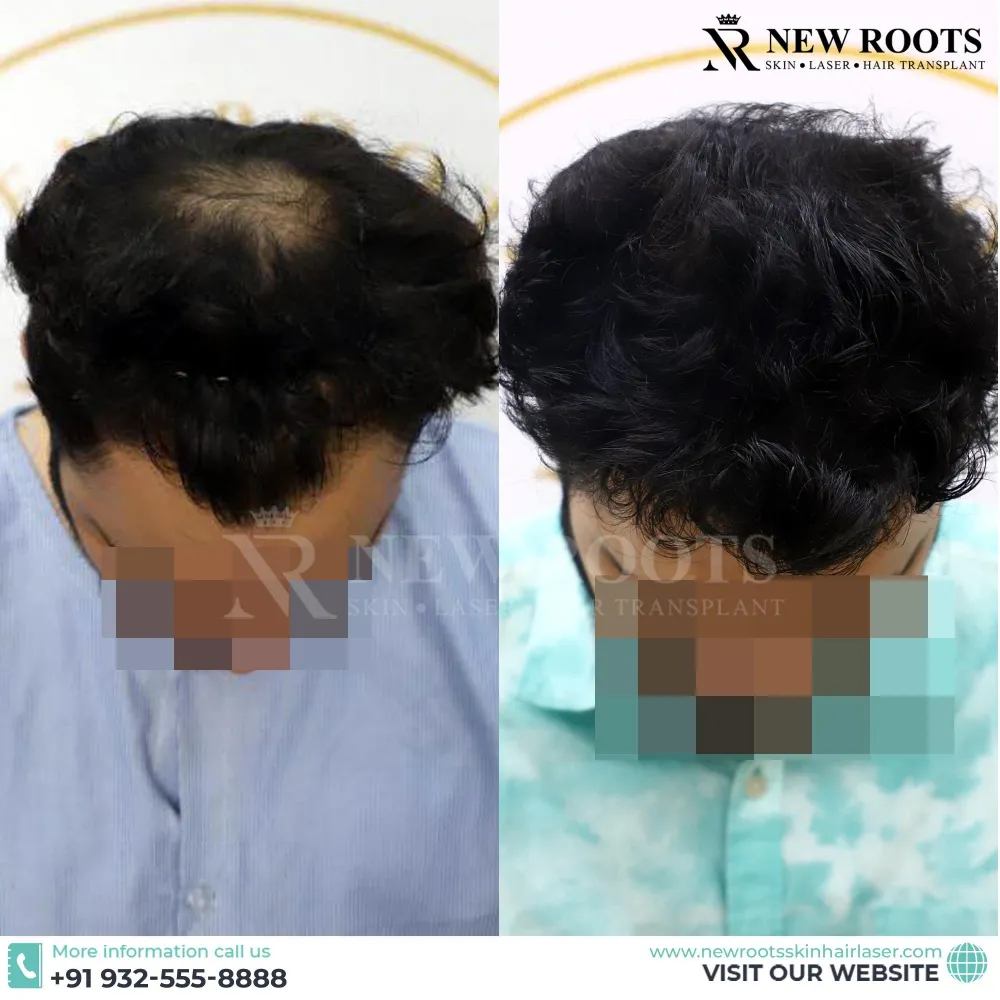
The results before and after this period show just a little but positive improvement.
👉 Month 6–9: Density Improvement Phase
The hair definitely gets thicker and more mature.
The main improvements:
- More hair on the scalp
- Less visibility of the scalp
- More robust hair fibers
- Better hair styling options
The period of time spent on this treatment is one of the main factors that determine the final results.
👉 Month 12: Peak Minoxidil Results
Most of the users get the maximum benefit at the end of one year.
Typical outcomes:
- 10–25% increase in the degree of visibility of density
- Quite a bit of cosmetic improvement
- Slower hair loss progression
This is often considered the best time to show before and after minoxidil results.
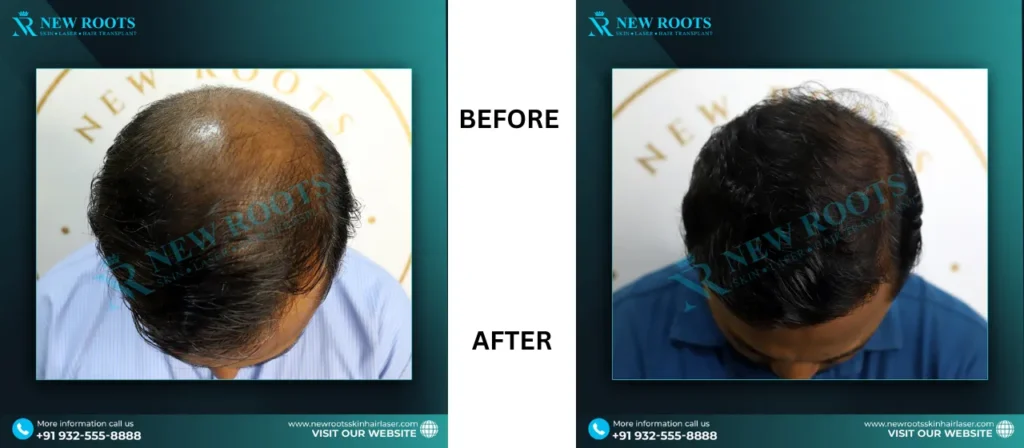
What Do Real Minoxidil Before-and-After Results Look Like?
Setting realistic expectations is a must.
What Minoxidil CAN Do
Slowing down the loss of hair
Increasing the volume of the current hair
Stimulating hair growth in the areas where hair is thinning
Increasing the hair density and coverage
What Minoxidil CANNOT Do
Bring back hair in the completely bald areas
Alter the patterns of genetic hair loss
Give the results permanently after the stoppage
Minoxidil regulates hair loss; it is not a cure.
Minoxidil Effectiveness: What Affects Your Results?
Many factors determine how well minoxidil works, and knowing them would assist in setting realistic expectations.
1. The stage of hair loss
Minoxidil is effective in the early stages of the hair thinning process. Results are significantly better when hair follicles are still active but weakened. Advanced baldness, where the follicles are no longer alive, will not respond well to minoxidil treatment.

2. Consistency of Use
The daily application without a break is necessary for the treatment to be successful. Prescribing doses or using minoxidil in an irregular way will interfere with the hair growth cycle and reduce the overall effectiveness.
3. Genetics
The individual genetic constitution is a factor of major importance. Some people are termed strong responders and see significant regrowth, while others may only have mild improvement.
4. Scalp Health
Conditions on the scalp that are healthy would promote better absorption. Problems like dandruff, inflammation, or fungal infections would be the cause of minimized penetration of minoxidil and, therefore, limited results.
5. Product Strength
Contrary to the higher concentrations that might be preferable, stronger stimulation might be provided, but the risk of irritation and side effects would also be high, thereby making the selection of the product quite important.
Minoxidil for Hair Growth in Men vs Women
👉 Men
- Best effects on the crown and mid-scalp
- Good for early male pattern baldness
- Lifelong use to sustain effects is a must
👉 Women
- Applicable for diffuse thinning
- Enhances total density
- Lower strengths are usually suggested
- Results are usually gradual but disguiseable as natural
Males and females are required to keep up with the therapy for continued improvement.
Common Side Effects During Minoxidil Use
When minoxidil is applied correctly, most of the side effects are mild and manageable.
Effects related to the scalp are the most frequent and typically show up in the first stage of the treatment.
The scalp might experience the following effects:
- Itching
- Dryness
- Flaking
- Mild redness
These reactions are mostly temporary and will lessen as the scalp becomes accustomed to the treatment.
Systematic effects (uncommon) may happen in particularly sensitive individuals or through excessive use.
The following may be experienced:
- Dizziness
- Headache
- Increased heart rate
Usually, by reducing the frequency of application, using the recommended amount, or changing to another formulation, one can get rid of the side effects without stopping minoxidil.
What Happens If You Stop Using Minoxidil?
The use of minoxidil is, by far, the most important factor affecting its effectiveness.
- Discontinue use after obtaining new hair with minoxidil, and it is the active ingredient that is responsible for keeping hair follicles alive and in the growth phase; thus, the medication is used up by the hair follicles.
- Stopping treatment leads to the shedding of the regrown hair within a period of 3 to 6 months, as the hair follicles gradually go back to their original hair loss cycle.
- The hair reverts to the pre-treatment state, with the same density and coverage as it used to be before starting minoxidil.
Minoxidil therapy is meant for maintenance and not a one-time solution. Regular and long-term treatment is required to maintain results and, in addition, to avoid further hair thinning that is detectable.
How to Maximise Minoxidil Hair Regrowth Results
If you want to enjoy the best minoxidil before and after results, your new daily rituals should consist of:
- Apply daily at the same time without fail
- Use the product only on a clean and dry scalp
- Do not skip doses
- Eat a diet rich in vitamins and minerals
- Control stress and get good sleep
- Stay away from strong hair products
- Use together with gentle scalp care
Sticking to the routine for months—not weeks—will be the secret.
Minoxidil Myths vs Facts
Myth: Minoxidil gives results in just one night
Fact: Minoxidil works according to the hair growth cycle, and so it takes time to be seen. Generally, one can see the results after 4–6 months of continuous application, and the greatest improvement is noticed around 9–12 months.
Myth: Shedding that is starting means that it is not working
Fact: The shedding that occurs at the beginning is an expected part of the procedure and means that the hair follicles are being turned on. The weak hairs are lost and replaced by strong and healthy new growth.
Myth: Hair that grows back can stop minoxidil
Fact: The hair that has been kept by minoxidil is dependent on the usage of the product. The cessation of the treatment will cause a gradual loss of hair regrowth within a few months.
Myth: More minoxidil application means quicker results
Fact: More applications do not mean faster hair growth and may lead to more side effects, such as scalp irritation and dryness.
Myth: Minoxidil is equally effective for everyone
Fact: Results differ according to the individual’s genetics, the hair loss stage, and proper use. Thinning hair in the early stages responds better than in later stages of baldness.
Myth: Minoxidil is a permanent solution to hair loss
Fact: Minoxidil controls hair loss but cannot eliminate its genetic cause. It is necessary to have long-term use of drugs to keep the results.
Who Should Avoid Minoxidil?
Minoxidil, in general, may not be the right choice for everyone, and some people need to steer clear of it unless a doctor gives the green light.
- People suffering from sudden hair loss that is hard to explain should not use it, since it could be a sign of a medical problem that needs to be treated properly after being diagnosed.
- Also, people who have infections on the scalp, open wounds, or active skin conditions should not use it, as this could make the irritation worse and increase the risk of side effects due to absorption.
- If you have any sensitivity to the product’s ingredients, it is better not to use it at all and thus avoid allergic reactions.
- Pregnant and nursing women should refrain from using the product unless their doctor gives explicit approval, as there are no reliable safety studies done in these situations.
It is really wise to consult a doctor before using minoxidil to ensure that it is safe, proper, and effective for the individual’s hair loss problem.
Is Minoxidil Worth It? Final Verdict
Minoxidil for hair growth is a reliable treatment with clinically supported effects for a majority of users, if it is used properly and consistently.
Minoxidil before and after results show:
- Decreased hair loss
- Increased density
- Thicker-looking hair
- Wider scalp coverage
Nevertheless, the outcome is determined by the factors of prompt usage, waiting, and continuous application.
Minoxidil, as a non-invasive and cost-effective method, is still one of the most effective first-line solutions for hair loss available today.
Conclusion
Minoxidil can’t be considered as a wonder drug for baldness; however, it stands to be the most scientifically backed up medication in the area of New Hair Growth.
When it is used rightly and regularly, it prevents hair loss, makes the current strands stronger, and revives the areas where thinning has taken place.
The outcomes take time, that is, typically, months, and the degree of change is affected by factors like heredity, extent of shedding, and consistency in the application.
With the right anticipations, persistence, and an option of long-term commitment, minoxidil will not only regrow the hair but will also noticeably improve the hair density, overall look, and even the person’s self-confidence over time.
FAQs on Minoxidil Hair Growth
The results after using minoxidil are not immediate and appear over time. The first stages can cause shedding in the next 4–6 weeks. Generally, improvement becomes noticeable between 4 and 6 months, while the best results are reached after 9–12 months of continuous use. Therefore, it is crucial to be patient and to apply minoxidil regularly in order to promote hair regrowth effectively.
Of course, the initial loss of hair is a usual and temporary situation. Minoxidil forces the weak hair to fall out so that stronger hair can grow. This is a stage that shows that the treatment is effective, and it usually lasts a few weeks.
The result of the treatment with minoxidil is not the same for everyone. Its best effect is seen in mild to moderate hair loss when the follicles are still active. Besides the genetic factors, other factors such as the consistency of use and the health of the scalp will affect the outcome.
Minoxidil will not be able to bring hair back in regions that have no hair follicles at all. Minoxidil is most effective in areas where hair is thinning rather than in completely bald regions where the scalp is shiny.
The hair that is gained from minoxidil use is not permanent, and it depends on the use of the product. Discontinuing the treatment typically results in shedding of the newly grown hair within 3–6 months, thus reverting the scalp to its pre-treatment condition.


