
Table of Contents
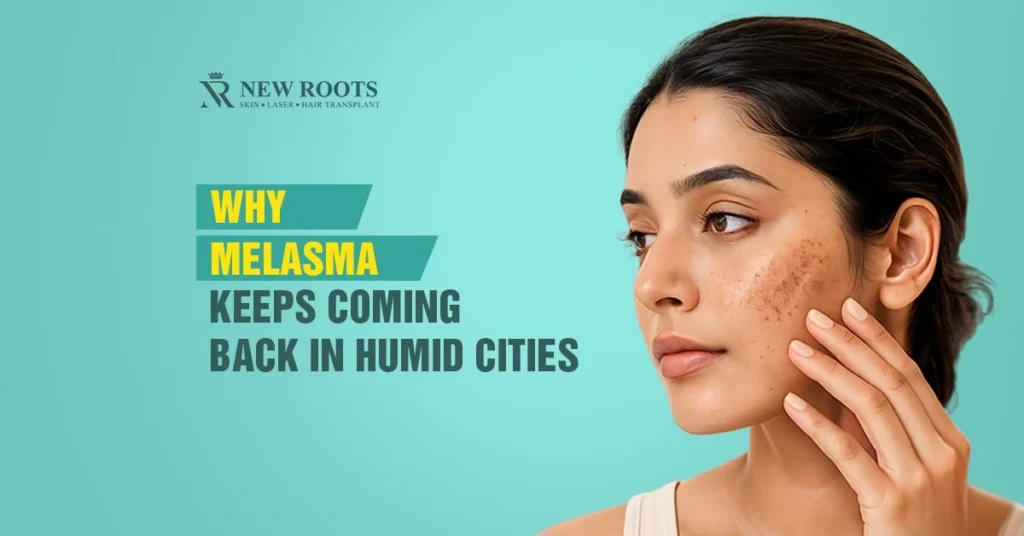
Melasma is a long-term disorder associated with dark patches and irregular pigmentation, prominently found on the cheeks, forehead, upper lip, and chin. Along with being persistent, it is also very challenging to treat in certain environments.
People living in tropical urban cities throughout West Bengal—including Kolkata, Siliguri, Durgapur, and Howrah—are quite familiar with feeling frustrated by melasma rebound.
After aggressive treatments, the melasma rebound almost always occurs. So, why does this happen? Maybe the weather? Or could it be urban pollution, stress, or something else?
This blog goes into the very deep connection between city climate, pigmentation, humidity, pollution, and melasma. Understanding the mechanism of melasma rebound, especially in high-humidity zones, would provide a basis for prevention and long-term management of this pigmentation disorder.
What Is Melasma and Why Is It So Persistent?
Melasma presents as a chronic skin condition in which dark patches and bizarre pigmentation appear on the faces of individuals, mainly the cheeks, forehead, upper lips, and chin.
This results from too much melanin, the pigment-making cell in the skin. It affects women more, particularly those of a medium-to-dark skin tone (Fitzpatrick types III to V), and there are certain precipitating factors:
- Ultraviolet light
- Hormonal alterations
- Hereditary predisposition
- Heat and infrared rays
- Inflammation of the skin
In places where humidity is quite high, such as West Bengal, the problem becomes even worse because of incessant sweating, rising temperature, and exposure to pollution.
These environmental stressors cause irritation to the skin, further stimulating the melanocytes (the pigment-producing cells), thus making humidity melasma even harder to treat.
The most frustrating aspect of melasma is its uncanny tendency to come back after treatment. This melasma rebound most often occurs when the very triggers that induce the melasma, such as UV radiation and humidity, remain operative in urban settings.
Relapses occur even if a treatment was apparently successful unless there are adequate undertakings in sun protection, barrier repair, and environmental intervention.
Consequently, management and control of melasma in humid urban zones cannot be restricted to topical remedies alone but instead call for a consistent skincare routine that considers city climate, pigmentation, and humidity melasma factors.
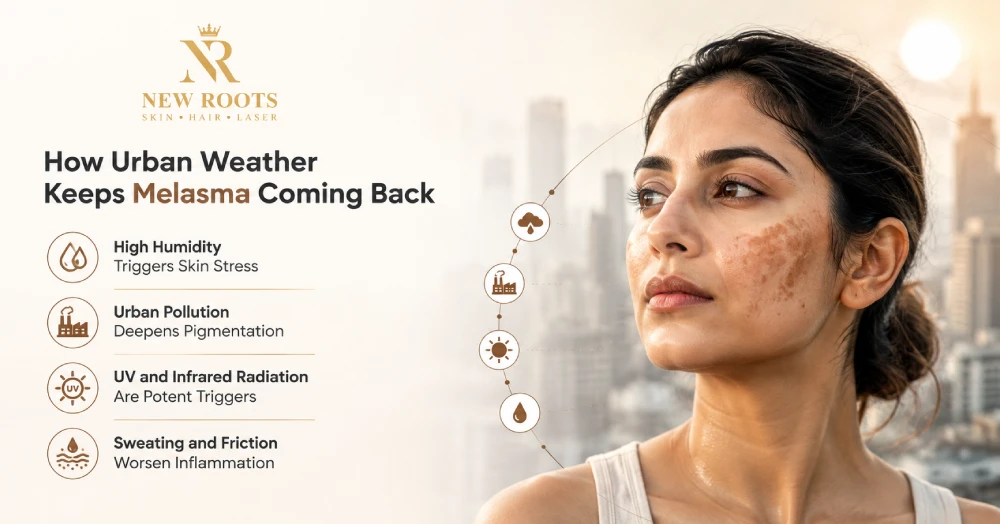
How Urban Weather Keeps Melasma Coming Back
1. High Humidity Triggers Skin Stress
West Bengal is endowed with a mostly tropical climate that varies with the monsoon, wherein the humidity remains mostly below that level of 75%. The months between April and October can be quaintly called sticky months, for the humidity never tends to fall below levels of 80-95% daily. Persistent exposure to the climate can cause a range of reactions:
- It increases oil secretion in the skin, which may clog pores and possibly inflame one’s skin.
- Sweat combined with moisture gets trapped on the surface of the skin, irritating.
- Heat plus humidity dilates blood vessels and increases permeability of the skin, so now the skin becomes reactive.
- Inflammation and skin sensitivity review melanocytes—cells that form pigments—in doing so providing a facility for humidity melasma flare-ups.
2. Urban Pollution Deepens Pigmentation
The congestion and industrialization of cities like Kolkata lead to air pollution being one of its prominent concerns. Theoretically, pollution, studied as nitrogen dioxide, PM2.5-sized particulate matter, and ozone at ground level, causes disruptions to the skin barrier and oxidative stress.
The oxidative stress will further induce the generation of free radicals that:
- Damage skin cells
- Activate melanogenesis (melanin production)
- Lead to uneven tone and dark patches
Pollution particles also penetrate deep within the skin-layer surface, especially where the barrier is already compromised due to humidity and the rays of the Sun. This dilemma of city climate pigmentation from pollution gets embedded into everyday life in the cities of West Bengal.
3. UV and Infrared Radiation Are Potent Triggers
Though we often use ultraviolet rays in sunlight for melasma, infrared radiation, especially heat, plays a crucial role in melasma rebound. Urban heat islands, due to heat trapped by concrete buildings and asphalt roads, elevate the skin temperature and stimulate melanocyte activity.
- UVA and UVB rays penetrate the skin and cause melanin synthesis.
- Infrared rays cause heat stress, thus aggravating inflammation and pigmentation.
- The UV radiation that comes through, even on a cloudy or rainy day (something common during the monsoon days of West Bengal) can trigger a rebound of melasma in an individual already prone to it.
4. Sweating and Friction Worsen Inflammation
Daily life in a humid city requires a lot of walking or commuting under crowded situations. The populace has no choice but to wear not-so-loose clothing or protective masks while friction occurs on common sites like the nose and upper lip with continuous movement.
Friction, coupled with sweat, can:
- Break down the skin barrier
- Set off some sort of low-grade inflammation
- Aggravate any existing dark patches
This inflammation is not really just one that arises because of heat; it is also a main signal to the melanocytes to produce more pigment. With time, these repetitive occurrences of slight inflammation will keep the melasma rebound alive and often bring about its comeback.
Melasma in West Bengal: Local Observations
Back in West Bengal, dermatologists have been citing an abnormal ratio of melasma in urban and peri-urban women aged 25-45. Some primary considerations identified are:
- Most exacerbations occur between April and September, those months being the highest for humidity and heat when perspiration, sun exposure, or a combination of both is easy.
- Pigmentation seems to be deeper and more dermal on the city side versus a bit more superficial on the rural side, possibly due to pollution levels or environmental stresses.
- Other risk factors seem to include women going outdoors for work, riding to work in their two-wheelers, or by public transport, this being another avenue for exposure to UV rays, heat, and dust.
Urban living in cities like Kolkata, Siliguri, and Durgapur spells harsh weather conditions for the skin, with pollution, heat, humidity, and stress as major contributing factors. These conditions keep stimulating melanin production and inflammation, causing pigmentation to appear and disappear, maybe for good.
To keep melasma at bay, urban women in West Bengal face an interminable battle without constant sun protection, barrier repair, and pollution defense, indicating the need for localized skincare techniques and long-term maintenance against humidity melasma and city climate pigmentation.
Melasma Rebound: Why Treatments Often Fail in Humid Zones
The rarest success is when melasma responds well to treatment, usually with the likes of chemical peels, topical lightening agents like hydroquinone or kojic acid, or laser therapy, especially in a humid, urban setting like West Bengal. In 2 or 3 months’ time, the condition tends to return, creating a double frustration for both patients and dermatologists. This is termed melasma rebound and happens due to an interlinked chain of events:
- Environmental Triggers That Are Constant
The way melasma therapies work is by targeting pigment within the skin, so no other countering measures are really taken against ever-present environmental insults. In humid cities, activities from UV radiation, heat, and air pollution perpetually keep activated melanocytes. Without taming these triggers in every single day routine, more melanin will be produced after healing, worsening humidity melasma. - Incomplete Barrier Recovery of Skin
High levels of humidity and pollution impede the skin’s healing capacity toward rebuilding a natural barrier. A weakened barrier renders the skin susceptible to irritants and external harms, environmental pollution, city climate pigmentation, and chronic melasma rebound. - Hormonal Effects
Women of urban West Bengal face multiple hormonal triggers ranging from contraception, pregnancy, and chronic stress. These internal factors, when combined with hostile external conditions, provide a perfect recipe for melasma rebound, making long-term management of humidity melasma extremely difficult to pursue.
How to Break the Melasma Rebound Cycle in Humid Cities
Managing melasma in a humid urban environment like West Bengal needs more than a short-term treatment; it needs a long-term and preventive approach wherein the protection of the skin from daily stress would be involved. So, here are a few points to decrease the chance of a melasma rebound while managing pigmentation.
1. Barrier-Repairing Skincare Routine
An adequately prepared skin barrier would keep pollutants, humid weather, and heat at bay. Follow this routine daily:
- Apply a gentle cleanser that is free of foaming sulfates so as not to strip your natural oils.
- Apply moisturizers containing ceramides, niacinamide, or panthenol to repair your skin and build it up.
- Use barrier creams or occlusive agents at night to seal in moisture.
- Avoid harsh scrubs, over-exfoliation, and strong activities that can cause inflammation and worsen dark patches.
2.Broad-Spectrum Sunscreen—Rain or Shine
Sunscreen must be applied despite sultry skies or the onset of monsoons, for UV rays cut through clouds and glass. Choose:
- SPF 50+ with PA++++ for high protection against UVA and UVB.
- Physical blockers such as zinc oxide or titanium dioxide should be included in your formula to provide additional photostability.
- Apply the sunscreen again every 2- 3 hours if you are sweating or working outside.
- Regardless of any pigmentation formation, persistent sun protection is for the purpose and helps prevent melasma rebound and worsening city climate pigmentation.
3. Ingredients for Anti-Pollution Skin-Care
Pollution hastens oxidative stress and worsening of dark spots. Include antioxidants such as:
- Vitamin C for brightness and protection
- Resveratrol and ferulic acid for combating free radicals
- Green tea extract for anti-inflammatory purposes
These work towards neutralizing damage posed by air pollutants, which is one chief reason for pigmentation in an urban environment and humidity-related melasma flare-ups.
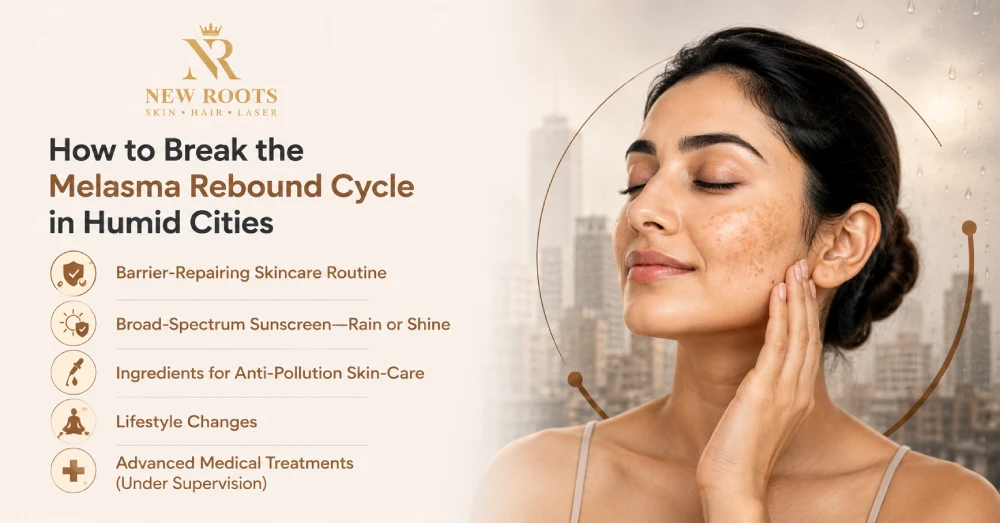
4. Lifestyle Changes
Daily habits can affect the development of melasma:
- Try to avoid getting direct sun exposure between 11 a.m. and 3 p.m.
- Wear a wide-brimmed hat, UV sunglasses, and carry an umbrella when walking outside.
- Go for breathable cotton masks and change the masks regularly so as to prevent sweat accumulation or friction that can worsen dark patches.
- Regularly practice stress-reduction regimens such as yoga, meditation, or proper sleep; chronic stress worsens the hormonal triggers and can aggravate melasma rebound.
5. Advanced Medical Treatments (Under Supervision)
The more rebel or really deep pigmentation may call for advanced dermatological procedures:
- Triple topical combinations (hydroquinone + tretinoin + mild steroid)
- Microneedling coupled with tranexamic acid for supervised and controlled skin renewal
- Low-energy Q-switched lasers that diminish melanin and pigmentation without causing inflammation
- Oral tranexamic acid, prescribed in indicated circumstances
The dermatologist must always be consulted before starting medical treatments so that the condition may not be aggravated, thus preventing melasma rebound
Conclusion: Humid Cities Demand Smarter Melasma Management
Melasma in West Bengal is more than a dermatological entity; it is a recurring environmental cycle aided by urban living, with its humidity, extreme heat, pollution, and sun.
Humidity melasma and city climate pigmentation pose modern dermatological problems that require more than just creams or lasers to solve.
Handling melasma in a humid metro such as Kolkata is about knowing the relationship between the skin and the environment. It is about barrier-repairing measures varying from sun protection to understanding that melasma rebound is far from failure; rather, it indicates that the skin requires holistic treatment in response to its climate in the long term.
By synchronizing skincare to environmental realities, melasma-prone persons dwelling in a humid urban setup like West Bengal may finally reverse the cycle and arrest the recurrence of the dark patches.
FAQs: Melasma in Humid Urban Zones
Melasma does tend to recur because environmental triggers otherwise maintain melanin production, namely ultraviolet rays, heat, humidity, and pollution. Intense treatment, say, in an urban humid area like West Bengal without non-stop preventive measures (sunscreens and barrier repairs) will almost guarantee the rebound of melasma.
Yes, it can. High humidity levels mean excessive sweating and oil secretion and make the skin hypersensitive. All these factors weaken the skin barrier and enhance inflammation, both of which can trigger melanin synthesis, worsening or bringing back humidity-induced melasma.
Such pigmentation gives the notion almost apt; that is true. Urban pollution gives rise to oxidative stress and causes inflammation, activating pigment-producing cells (melanocytes), hence causing uneven pigmentation and dark patches, generally termed city climate pigmentation.
Use a broad-spectrum sunscreen with SPF 50+ and PA++++. Choose ingredients of zinc oxide or titanium dioxide for physical blockage. In a humid climate, lightweight, matte-finish, or gel-based sunscreens are preferable to avoid feeling greasy or clogging pores.
Yes, you can deal with it in the long term through consistent care. The first thing to do is to build and maintain your skin barrier; use daily sunscreen (even during the monsoon); apply antioxidant-rich skincare to fight pollution; and protect your face against heat and friction.


